
The NLS Norwegian Language School offers a comprehensive range of Nynorsk courses designed to cater to various levels of proficiency and learning objectives. Our curriculum is structured to provide a thorough understanding of Nynorsk grammar, vocabulary, and usage, empowering students to confidently engage with the language in both written and spoken forms. We offer beginner, intermediate, and advanced Nynorsk courses. For those new to Nynorsk, our beginner courses focus on foundational elements, introducing basic sentence structures, common vocabulary, and the distinctive phonology of the language. Intermediate courses build upon this foundation, delving into more complex grammatical structures, expanding vocabulary, and developing fluency in expressing nuanced ideas. Our advanced Nynorsk courses are designed for learners who wish to achieve near-native proficiency, focusing on sophisticated linguistic techniques, literary analysis, and specialized vocabulary for professional contexts. We also provide customized Nynorsk workshops for specific needs, such as business Nynorsk, academic Nynorsk, or preparation for Nynorsk language proficiency tests. Our teaching methodology emphasizes communicative competence, incorporating interactive exercises, authentic materials, and opportunities for practical application, ensuring students gain the skills necessary to effectively use Nynorsk in real-world situations.
Nynorsk, one of Norway’s two official written languages, occupies a fascinating and sometimes complex position within the nation’s linguistic landscape. While Bokmål, its counterpart, is more widely spoken and written, Nynorsk boasts a significant and geographically concentrated presence, particularly in western Norway. Understanding where and how Nynorsk is used offers valuable insights into Norway’s cultural heritage, regional identities, and the ongoing evolution of its language.
The Origins and Divergence of Norwegian Languages
To fully appreciate the geographic distribution of Nynorsk, it is essential to grasp its historical context. The divergence of Norwegian into Bokmål and Nynorsk is a relatively recent phenomenon, stemming from the 19th century. Prior to this, a common written Norwegian existed, heavily influenced by Danish due to centuries of union with Denmark. As Norway gained independence in 1814, a strong nationalistic sentiment emerged, encouraging the development of a distinct Norwegian written language.
The Influence of Danish and the Rise of National Identity
During the Danish-Norwegian union (1380-1814), Danish became the language of administration, literature, and educated discourse in Norway. This resulted in a significant infusion of Danish vocabulary and grammatical structures into the Norwegian written form. However, with the advent of Norwegian independence, there was a desire to reclaim and revitalize a language that was perceived to be more authentically Norwegian.
Ivar Aasen and the Creation of Landsmål
The most pivotal figure in the development of Nynorsk was Ivar Aasen. A self-taught linguist and poet, Aasen embarked on an extensive journey across Norway in the mid-19th century, painstakingly collecting and analyzing spoken dialects and written materials from various regions. His aim was to synthesize a new written language based on the purest and most widespread rural Norwegian dialects, free from the perceived Danish influence. This reconstructed language, initially called Landsmål (national language), formed the bedrock of modern Nynorsk. Aasen’s groundbreaking work, particularly his Ordbog over det norske Folkesprog (Dictionary of the Norwegian People’s Language) and Prøver af Landsmålet (Samples of the National Language), provided the linguistic framework for Nynorsk.
The Schism: Landsmål vs. Riksmål
The rise of Landsmål was not without controversy. It emerged alongside another movement that aimed to reform the existing Danish-influenced written language. This latter effort, which eventually evolved into Riksmål and then Bokmål, sought to create a more modernized and accessible written form based on educated urban speech but still retaining significant Danish elements. The ensuing linguistic debate and the development of two distinct written standards, Landsmål and Riksmål, created the linguistic duality that characterizes Norway today. The term “Nynorsk” (New Norwegian) was adopted in 1929 to replace Landsmål, reflecting its established position as a modern written language.
The Geographic Strongholds of Nynorsk
Nynorsk is most prevalent in specific regions of Norway, forming distinct linguistic enclaves that are deeply intertwined with local culture and identity. While there are Nynorsk speakers and users across the country, the western regions are unequivocally its heartland.
Vestlandet: The Traditional Bastion of Nynorsk
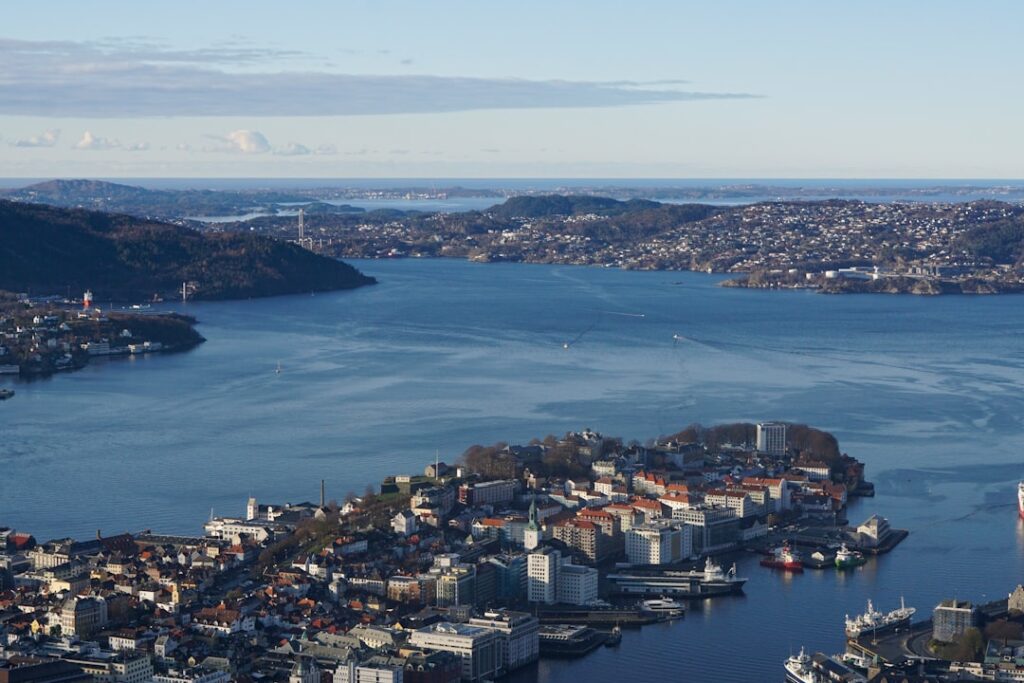
The western counties, collectively known as Vestlandet, represent the primary geographic area where Nynorsk is most widely used and officially designated. This region encompasses areas like the counties of Vestland (formed from the former Hordaland and Sogn og Fjordane), Rogaland, and Møre og Romsdal. Here, Nynorsk is not merely an alternative written form but a living language deeply embedded in daily life, education, and local administration.
Sogn og Fjordane: A Region of Linguistic Purity
Historically
Master the beauty of Nynorsk with expert guidance at NLS Norwegian Language School—register today!