
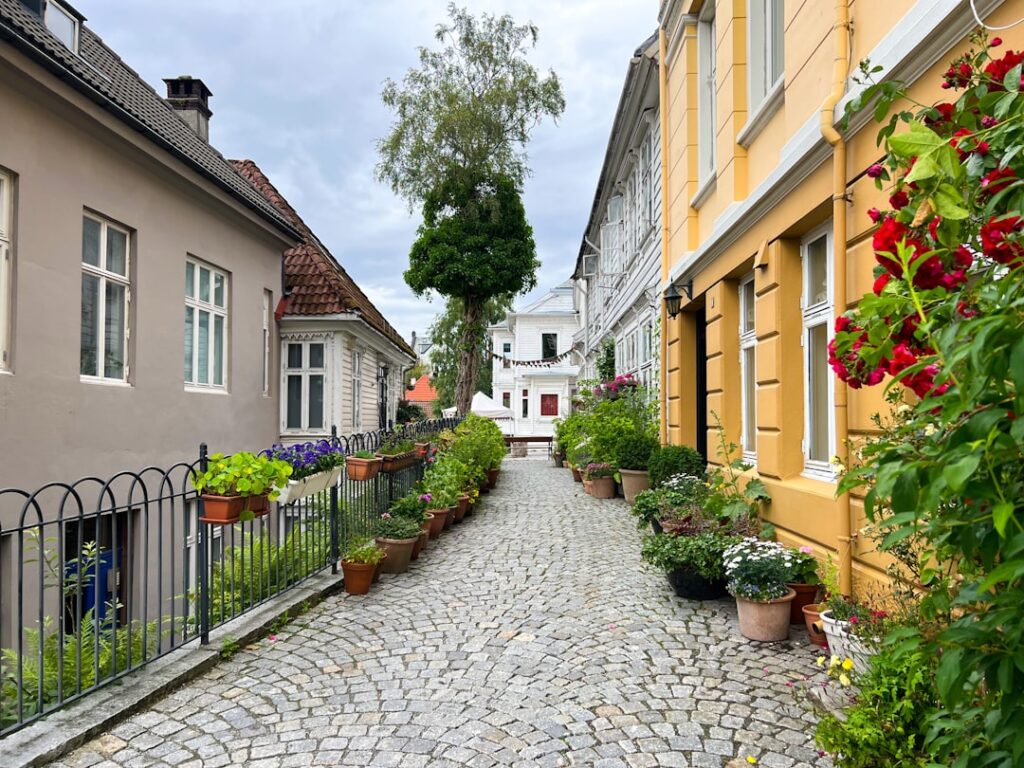
The Norwegian Language School offers a comprehensive range of Nynorsk courses designed to cater to various levels of proficiency and learning objectives. Our curriculum is structured to provide a solid foundation in Nynorsk grammar, vocabulary, and syntax, while also emphasizing its practical application in everyday communication and professional settings. Students can choose from introductory courses for absolute beginners, intermediate levels focusing on deepening comprehension and fluency, and advanced courses for those seeking mastery and specialization. We also offer specialized workshops and private tuition options to address specific learning needs, such as preparing for official Nynorsk exams or focusing on particular aspects of the language, like business Nynorsk or Nynorsk for academic purposes. Our qualified instructors are experienced in teaching Nynorsk and are dedicated to creating an effective and supportive learning environment.
Embarking on the journey to learn any language is often idealized. Textbooks present a clean, logical progression, and promotional materials paint a picture of effortless mastery. Nynorsk, one of Norway’s two official written languages, is no exception. While the NLS Norwegian Language School, and indeed other reputable institutions, strive to provide accurate and effective instruction, there are certain nuances, challenges, and practicalities of learning Nynorsk that often remain in the background, only revealed through experience. This article aims to shed light on some of these less-discussed aspects, offering a more grounded perspective for aspiring Nynorsk learners.
The Dual Landscape of Norwegian
The existence of two official written forms of Norwegian – Bokmål and Nynorsk – is a foundational concept, but its implications for learners can be multifaceted and perhaps not fully appreciated during initial enrollment.
The Historical Context, Briefly
Understanding the historical and socio-political roots of both Bokmål and Nynorsk can offer valuable context, but it’s rarely the primary focus of early language lessons. While the historical development is fascinating, the immediate need for learners is to grasp the functional differences and similarities.
The Nationalist Movement and Language Standardization
Nynorsk emerged from a conscious effort to create a written language that was more deeply rooted in Norwegian dialects, distinguishing it from Bokmål, which has a stronger historical link to Danish. This cultural and nationalistic drive shaped its development.
The Ongoing Debate and Practical Implications
The relationship between Bokmål and Nynorsk is not static. While official policies aim for mutual intelligibility and even a degree of merging, practical usage and perception can vary. Learners might encounter situations where the choice of language has social or regional significance, which isn’t always explicitly detailed in course syllabi.
Beyond the Binary: Mutual Intelligibility and Divergence
While often presented as two distinct languages, Bokmål and Nynorsk are mutually intelligible to a significant degree for many Norwegians. However, for learners, this can create a confusing dichotomy.
The “Easier” Starting Point: A Common Misconception
Many learners are surprised to find that their initial exposure to Nynorsk, especially via simplified learning materials, might feel distinct from what they might later encounter in authentic texts or spoken discourse. This perceived difference can lead to a reassessment of what constitutes an “easier” starting point.
Navigating Dialectal Influences
Nynorsk is consciously built upon Norwegian dialects, and this can manifest in its grammar and vocabulary. While this provides a rich linguistic tapestry, it also means that there can be regional variations within Nynorsk itself, which can be a challenge to fully grasp for non-native speakers.
Grammatical Divergences: More Than Just a Few Letters
The grammatical differences between Bokmål and Nynorsk are significant and form a core part of any Nynorsk curriculum. However, the practical implications of these differences in real-world application can be less straightforward than textbook examples suggest.
Verb Conjugations: A Different Rhythm
Verb conjugations in Nynorsk often follow patterns that are distinct from Bokmål. This requires dedicated memorization and practice, and learners may find certain conjugations to be more intuitive than others based on their native language background.
The Endings and Their Variations
The specific endings for present tense verbs, past tense, and participles can be a source of confusion. Unlike Bokmål’s often more regular patterns, Nynorsk verbs can exhibit more diverse forms, requiring careful attention to detail.
Irregular Verbs: A Persistent Challenge
As with any language, irregular verbs pose a consistent challenge. Nynorsk has its own set of irregular verbs, and mastering them requires consistent exposure and active recall.
Noun Declensions: A World of Endings
The declension of nouns – how they change based on grammatical case and definiteness – is another area where Nynorsk exhibits significant differences.
Gender Agreement: A Nuance to Remember
Nynorsk, like Bokmål, has grammatical gender for nouns (masculine, feminine, neuter). However, the gender of many nouns can differ between the two written forms, necessitating a new set of associations to be formed by the learner.
The Definite Forms: A Visual Cue
The definite forms of nouns, particularly in the singular, often have distinct endings in Nynorsk. For example, “mannen” (Bokmål) becomes “mannen” or “mannan” (Nynorsk, depending on dialectal influence and standardisation) for the definite masculine singular. Understanding these endings is crucial for correct article usage and sentence construction.
Plural Forms: A Shift in Paradigms
Nynorsk often employs different plural endings for nouns compared to Bokmål, particularly in the indefinite plural. Learning these alternative forms adds another layer to the memorization process.
Pronouns and Adjectives: Subtle Shifts in Form and Function
While seemingly minor, changes in pronouns and adjective agreement can impact the natural flow of sentences.
Personal Pronouns: A Different Set of Faces
The forms of personal pronouns can differ, and learners need to become accustomed to these new set of words. For instance, the third-person plural pronoun “dei” in Nynorsk is distinct from Bokmål’s “de”.
Adjective Agreement: More Than Just Matching Endings
Adjectives in Nynorsk must agree in gender, number, and definiteness with the noun they modify. This might involve different endings than what learners are accustomed to if they have prior exposure to Bokmål or other Germanic languages.
Vocabulary: Not Just “Different Words”
The vocabulary of Nynorsk is a rich blend, drawing from historical Norwegian dialects and also incorporating loanwords. What learners might not anticipate is the sheer breadth of these influences and how they can manifest in everyday usage.
The Dialectal Roots: A Source of Richness and Potential Confusion
Nynorsk’s deliberate connection to spoken Norwegian means that many words and expressions originate from various dialects. While this adds a unique flavor, it can also present challenges if one’s only exposure is to a more standardized, textbook Nynorsk.
Regionalisms: The Unspoken Lexicon
Certain words might be more common in specific regions of Norway, and these can find their way into Nynorsk texts. Recognizing these regionalisms might require exposure beyond formal lessons.
Older Word Forms: A Glimpse into the Past
Some Nynorsk vocabulary utilizes older forms of words that have been phased out or are less common in Bokmål. This can sometimes make Nynorsk feel more “archaic” to learners, even when it reflects historical linguistic continuity.
Loanwords and Internationalisms: A Common Ground
Despite its emphasis on Norwegian roots, Nynorsk also incorporates loanwords and internationalisms, just like Bokmål. The difference often lies in the subtle phonological or morphological adaptations of these words.
Subtle Differences in Borrowing
While the same international words might be used in both Nynorsk and Bokmål, their spelling or pronunciation might sometimes be adapted to better fit Nynorsk’s phonetic system. This can be an area where learners need to be exceptionally observant.
The “Bokmål-ization” of Nynorsk Vocabulary
In some spheres, there can be a tendency to adopt vocabulary more commonly associated with Bokmål, leading to a degree of linguistic crossover. Learners might notice this phenomenon as they engage with more authentic Nynorsk materials.
From grammar to fluency: Perfect your Nynorsk skills with the dedicated teachers at NLS Norwegian Language School.
Practical Application: Bridging the Gap Between Theory and Reality
Language schools excel at providing theoretical knowledge, but the practical application of Nynorsk in the real world presents its own unique set of considerations that are often honed through experience.
Navigating the “Nynorskometer”: Understanding Context
Norwegians themselves often describe a “Nynorskometer” – an intuitive understanding of when and where Nynorsk is more likely to be used or appreciated. This isn’t something that can be explicitly taught in a classroom.
Regional Usage: The Geographic Divide
While Nynorsk is an official language nationwide, its prevalence varies significantly by region. In Western Norway, for example, Nynorsk is much more widely used in schools, media, and official contexts than in Eastern Norway. Understanding this geographical distribution is crucial for practical engagement.
Institutional Choices: A Matter of Policy and Prestige
Various institutions, from municipalities to national media outlets, make conscious choices about which written form of Norwegian they primarily use. These decisions can be influenced by historical reasons, local demographics, or political stances.
The Role of Bokmål in the Nynorsk Learner’s Life
Even as a dedicated Nynorsk learner, encountering Bokmål is almost inevitable in Norway.
Mutual Intelligibility: A Double-Edged Sword
As mentioned, mutual intelligibility can be beneficial, but it can also lead to a situation where learners might feel less compelled to fully master Nynorsk if they can understand Bokmål. The goal of deep linguistic understanding requires pushing beyond this basic comprehension.
The Need for Nuance: Recognizing Differences in Practice
While Bokmål and Nynorsk are generally understandable to speakers of the other, there are subtle differences in idiomatic expressions, common phrasing, and even tone. A learner who only focuses on Nynorsk might miss these nuances when encountering Bokmål.
Speaking Nynorsk: A Different Skill Set Entirely
Most language courses focus heavily on reading and writing. The ability to speak Nynorsk, incorporating its phonetic nuances and regional variations, is a separate and often more challenging skill to acquire.
The Influence of Spoken Dialects
When Nynorsk speakers converse, their speech is often influenced by their native dialects. This can result in variations in pronunciation, intonation, and even vocabulary that may not be explicitly covered in textbook materials.
The Social Aspect of Speaking Nynorsk
For some, speaking Nynorsk is a conscious act of cultural identity. Learners might feel pressure to adopt a certain manner of speaking, which can be daunting.
The Nuance of Assessment and Progress
How progress in learning Nynorsk is measured, and what constitutes “proficiency,” can sometimes be more complex than anticipated.
Beyond the Final Exam: A Continuum of Competence
While formal exams provide benchmarks, true proficiency in Nynorsk, as with any language, is a continuous process. Learners might feel confident in their reading comprehension but struggle with spontaneous spoken production.
Reading vs. Writing: Different Strengths and Weaknesses
A learner might excel at reading Nynorsk texts but find constructing grammatically correct Nynorsk sentences challenging for writing assignments. These are distinct skills that require different approaches to practice.
Listening Comprehension: The Unseen Hurdle
Understanding spoken Nynorsk, especially when laced with regional dialects, can be a significant hurdle that formal courses may not fully prepare one for. Dedicated listening practice with authentic materials is often essential.
The Evolving Nature of Language: Staying Current
Language is not static. Nynorsk, like Bokmål, evolves over time, with new words entering the lexicon and established words taking on new meanings.
Keeping Up with Linguistic Trends
Staying abreast of contemporary Nynorsk usage requires ongoing engagement with media, literature, and spoken discourse. Language courses provide a strong foundation, but continuous learning is key.
The Impact of Digital Communication
The rise of digital communication has influenced language use in both Nynorsk and Bokmål. Slang, abbreviations, and informal writing styles can present new challenges and require adaptation for learners.
Conclusion: Embracing the Full Picture
Learning Nynorsk at a reputable institution like the NLS Norwegian Language School provides a robust and methodical education. However, understanding the broader landscape – the historical context, the practical regional variations, the subtle differences in vocabulary and grammar, and the continuous nature of language acquisition – allows learners to approach their studies with a more realistic and ultimately more rewarding perspective. By being aware of what might not be explicitly emphasized in introductory materials, Nynorsk learners can better prepare themselves for the rich and multifaceted experience of engaging with this unique written form of Norwegian.
Master the beauty of Nynorsk with expert guidance at NLS Norwegian Language School—register today!