
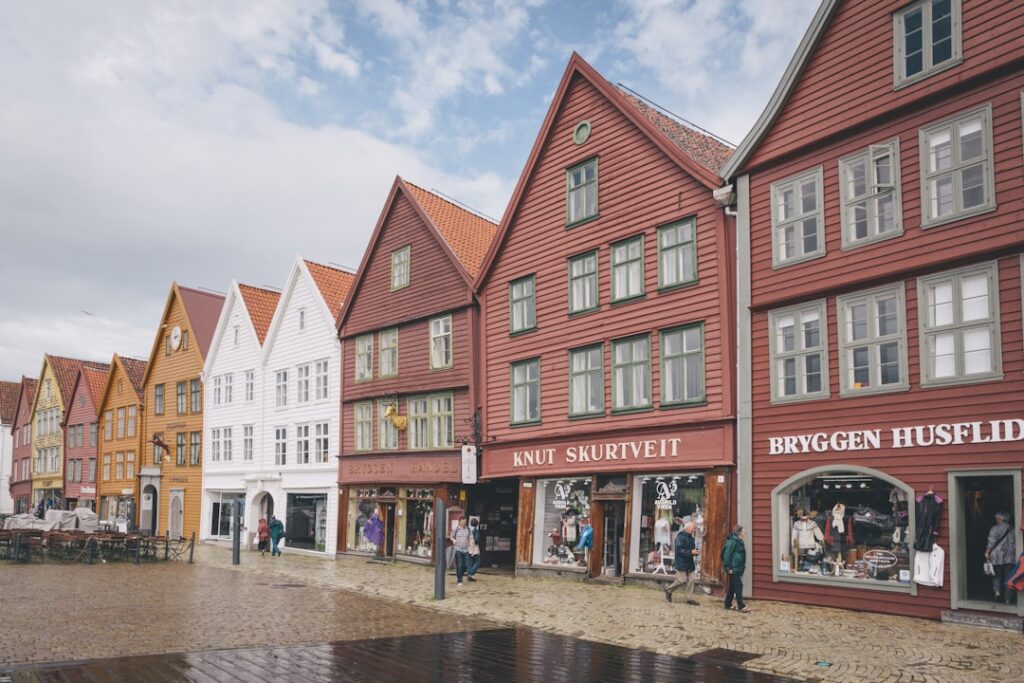
At NLS Norwegian Language School, we offer a comprehensive range of Nynorsk courses designed to cater to learners of all levels, from absolute beginners to those seeking advanced fluency. Our curriculum is structured to provide a thorough understanding of Nynorsk grammar, vocabulary, and usage, equipping students with the confidence to communicate effectively in this distinct Norwegian dialect.
Beginner Nynorsk: This introductory course is designed for individuals with no prior experience in Nynorsk. It focuses on building a foundational understanding of the language, covering essential grammar, pronunciation, and basic vocabulary. Students will learn to construct simple sentences, engage in everyday conversations, and develop a solid base for further learning.
Intermediate Nynorsk: For learners who have completed beginner courses or possess a basic knowledge of Nynorsk, this level delves deeper into the language. We expand vocabulary, introduce more complex grammatical structures, and focus on developing reading and writing skills. Emphasis is placed on active communication and understanding nuanced expressions.
Advanced Nynorsk: This course is for proficient Nynorsk speakers looking to refine their skills and achieve a higher level of fluency. Advanced topics include sophisticated grammar, idiomatic expressions, and exploring various registers of Nynorsk. Students will engage with authentic Nynorsk texts and engage in critical discussions, honing their ability to express complex ideas with precision and clarity.
Nynorsk for Specific Purposes: We also offer specialized courses tailored to individual needs, such as Nynorsk for academic purposes, business Nynorsk, or Nynorsk for creative writing. These courses focus on the specific vocabulary and discourse conventions relevant to each field.
All our Nynorsk courses are taught by experienced and qualified instructors who are native speakers or possess a deep understanding of Nynorsk. We utilize a variety of engaging teaching methodologies, including interactive lessons, practical exercises, and authentic learning materials, to ensure a supportive and effective learning environment.
Navigating any language requires a grasp of its most frequently used vocabulary. Nynorsk, one of Norway’s two official written standards, is no exception. While sharing a significant number of words with Bokmål, Nynorsk possesses its own distinct lexical landscape and grammatical tendencies. Understanding the bedrock of Nynorsk through its common words is an essential step for any learner aiming for fluency and authentic comprehension. This exploration will delve into fifty of the most prevalent Nynorsk words, providing insight into their meanings and typical usage. By internalizing these fundamental building blocks, learners can begin to decipher Nynorsk texts and construct basic sentences with greater ease and accuracy.
The Importance of Core Vocabulary in Language Acquisition
The acquisition of any language is a multifaceted process. While grammar provides the skeletal structure, vocabulary forms the flesh and blood, enabling communication of meaning. For learners of Nynorsk, identifying and mastering the most common words is a pragmatic and highly effective strategy. These words, often simple in form but rich in function, appear repeatedly in everyday speech and writing. Their consistent presence makes them prime candidates for early memorization, as they unlock the ability to understand and generate a substantial portion of linguistic output. Moreover, understanding the nuances of these common words can also shed light on broader Nynorsk grammatical patterns and word formation.
Building Blocks for Basic Communication
The initial stages of language learning are characterized by a need for functional communication. The ability to express basic needs, ask simple questions, and understand common responses hinges on a robust understanding of high-frequency vocabulary. These fifty words, when learned, will empower learners to engage in rudimentary conversations, navigate simple texts, and begin to feel comfortable with the rhythm and sound of Nynorsk. They serve as the initial toolkit, allowing for immediate practical application of learned knowledge.
Unlocking Comprehension of Written and Spoken Nynorsk
A significant portion of any language, whether written or spoken, is composed of a relatively small set of words. By focusing on the most common Nynorsk words, learners can significantly enhance their comprehension skills. When encountering a Nynorsk text or listening to a Nynorsk speaker, recognizing these frequent words acts as an anchor, providing context and direction for understanding the overall message. This foundational knowledge reduces the cognitive load associated with deciphering unfamiliar language and fosters a sense of progress.
Common Nouns: The Pillars of Nynorsk Discourse
Nouns are the words that name people, places, things, and ideas. In Nynorsk, as in any language, certain nouns are so ubiquitous that they form the very foundation of everyday descriptions and narratives. Mastering these core nouns is crucial for understanding the subject matter of sentences and for describing the world around us. This section will highlight some of the most prevalent nouns, offering a glimpse into the tangible and abstract elements that populate Nynorsk discourse.
Objects and Concepts in Everyday Life
The abstract nature of language is grounded in concrete experiences. The most common nouns often refer to the most common objects and concepts encountered daily. Think of words for family members, common household items, natural phenomena, or fundamental human emotions. These are the terms that allow us to share our immediate environment and internal states with others. Their high frequency is a testament to their essential role in human interaction.
Verbs: The Engine of Nynorsk Sentences
Verbs are the action words of a language; they describe what is happening, what has happened, or what will happen. The most common verbs are the workhorses of Nynorsk, driving sentence structures and conveying essential actions and states of being. Without a firm grasp of these verbs, constructing coherent sentences and understanding the flow of an argument or narrative becomes incredibly challenging.
Expressing Actions and States of Being
The fundamental purpose of verbs is to animate sentences. Whether describing an action performed by a subject or a state of existence, verbs are indispensable. The most common verbs in Nynorsk will include those related to fundamental human activities like moving, speaking, seeing, and eating, as well as verbs that express existence, possession, and perception. Their versatility often means they can be used in a multitude of contexts, further increasing their frequency.
Pronouns and Adjectives: Adding Detail and Clarity
While nouns and verbs form the core of many sentences, pronouns and adjectives play vital roles in refining meaning and making communication more precise. Pronouns replace nouns to avoid repetition, and adjectives provide descriptive detail, painting a clearer picture for the listener or reader. Understanding these word classes within the Nynorsk context is key to appreciating the richness and expressiveness of the language.
Replacing Nouns and Describing Qualities
Pronouns are essential for smooth linguistic flow, allowing sentences to connect logically without cumbersome repetition of noun phrases. Common pronouns in Nynorsk will include those that refer to persons (I, you, he, she, it, we, they) and possessives. Adjectives, on the other hand, add color and specificity. The most common adjectives often describe basic qualities such as size, color, taste, or emotional states, providing the descriptive detail that enriches our understanding.
Prepositions and Conjunctions: The Connective Tissue of Nynorsk
Languages are not merely collections of individual words; they are systems where words are linked together to form coherent thoughts. Prepositions and conjunctions are the grammatical glue that binds these words and clauses together, dictating relationships of time, place, cause, and effect. Mastering the most common examples of these functional words is crucial for understanding sentence structure and the logical progression of ideas in Nynorsk.
Establishing Relationships and Linking Ideas
Prepositions, such as those indicating location or direction, and conjunctions, which join clauses or words, are the unsung heroes of grammar. They are short, often monosyllabic words, but their impact on meaning is profound. A misplaced preposition or an incorrectly used conjunction can alter the intended message entirely. Therefore, recognizing and correctly using the most frequent Nynorsk prepositions and conjunctions is a vital step in achieving grammatical accuracy and communicative clarity.
Other Essential Word Categories in Nynorsk
Beyond the major word classes, several other categories of words are indispensable in Nynorsk for expressing a wide range of communicative functions. These include adverbs, which modify verbs, adjectives, or other adverbs, and numerals, which quantify. Their frequent appearance in Nynorsk demonstrates their importance in conveying specificity and modifying the meaning of other words.
Modifiers and Quantifiers
Adverbs answer questions about how, when, where, and to what extent something is done. Numerals, while seemingly straightforward, are fundamental for any discussion involving quantities, order, or measurements. The most common adverbs will often pertain to time, manner, and place, while basic numerals are necessary for everyday transactions and descriptions. Their inclusion in a list of the most common Nynorsk words underscores their consistent utility in adding precision to language.
Decoding Nynorsk: A Deeper Dive into the Top 50 Words (Continued)
Having established the foundational importance of high-frequency vocabulary in Nynorsk, we now proceed with a more detailed examination of the most common words. This section will continue to build upon the themes introduced earlier, offering specific examples and contextual usage for a broader range of essential Nynorsk terms. The goal is to provide learners with a practical and accessible resource for expanding their Nynorsk lexicon.
The Pronoun Landscape in Nynorsk
Pronouns are indispensable for efficient and natural-sounding language. They serve as placeholders for nouns, streamlining sentences and preventing awkward repetition. In Nynorsk, as in many Germanic languages, the system of pronouns is relatively consistent, but specific forms and usages are important to note. Understanding the most common pronouns will allow learners to follow conversations and read texts with greater ease, as these words offer structural clues and referential clarity.
Personal Pronouns: Referring to People and Things
The core of any pronoun system lies in its personal pronouns. In Nynorsk, these are words like eg (I), du (you – singular), han (he), ho (she), det (it), vi (we), dei (they). The singular “you” form, du, is commonly used in informal contexts. The plural “you” is dei. Understanding the correct usage based on gender and number is a fundamental aspect of Nynorsk grammar. For example, differentiating between han and ho is straightforward, but recognizing that det can refer to inanimate objects or abstract concepts is also key. The plural dei is used for both masculine, feminine, and neuter plural nouns.
Possessive Pronouns: Indicating Ownership
Closely related to personal pronouns are possessive pronouns, which indicate ownership. In Nynorsk, these include min (my/mine), din (your/yours – singular), hans (his), hennar (her/hers), dets (its), vår (our/ours), and deira (their/theirs). These words agree in gender and number with the noun they modify. For instance, one would say ein bil min (a car of mine) or ei bok mi (a book of mine). The forms change depending on the gender and number of the noun possessed. This agreement is a critical grammatical feature to master for accurate Nynorsk expression.
Demonstrative Pronouns: Pointing and Identifying
Demonstrative pronouns like denne (this – singular), dette (this – neuter), desse (these – plural), den (that – singular), and det (that – neuter) are used to point to specific nouns. Similar to possessive pronouns, they also agree in gender and number with the noun they refer to. For example, denne bilen refers to “this car.” When referring to abstract ideas or concepts, det is often used. Understanding the subtle differences between demonstrative pronouns and their role in specifying reference is crucial for precise communication.
Essential Verbs: Actions and States of Being in Nynorsk (Part 1)
The action words of a language are its driving force, enabling us to describe events, express desires, and articulate states of existence. In Nynorsk, a core set of verbs appears with remarkable frequency, forming the backbone of countless sentences. Mastering these frequently used verbs will provide learners with the tools to construct a wide range of expressions and comprehend the essence of Nynorsk narratives.
‘Å vere’ and ‘Å ha’: Fundamental Existential Verbs
Two of the most fundamental verbs in any language are the equivalents of “to be” and “to have.” In Nynorsk, these are å vere (to be) and å ha (to have). The conjugation of å vere is particularly important: eg er (I am), du er (you are), han/ho/det er (he/she/it is), vi er (we are), dei er (they are). The present tense is largely regular. Å ha is also crucial: eg har (I have), du har (you have), han/ho/det har (he/she/it has), vi har (we have), dei har (they have). These verbs are essential for forming basic sentences, expressing possession, and describing states of being.
‘Å seie’ and ‘Å gjere’: Communication and Action
Å seie (to say) is a vital verb for expressing speech and reporting dialogue. Its common forms include eg seier (I say), du seier (you say), and so on in the present tense, and past tense forms like sa (said). Å gjere (to do/make) is another extremely common verb, covering a broad spectrum of actions and creations. Present tense forms are eg gjer (I do), du gjer (you do), etc., with past tense forms such as gjorde. These verbs are instrumental in describing interactions and activities.
Adverbs: Modifying Meaning in Nynorsk
Adverbs are crucial for adding detail and nuance to our communication. They modify verbs, adjectives, and other adverbs, providing information about time, place, manner, and degree. In Nynorsk, understanding the most common adverbs is key to grasping the finer points of meaning and developing a more sophisticated command of the language.
Temporal Adverbs: When and How Often
Adverbs that indicate time are fundamental for establishing sequence and duration. Common temporal adverbs in Nynorsk include no (now), alt (already), snart (soon), allereie (already – sometimes used interchangeably with alt), tidleg (early), and sein(t) (late). These words help to orient events in time, making narratives clearer and instructions more precise. For instance, eg kjem snart means “I am coming soon.”
Adverbs of Manner: How Things Happen
Adverbs of manner describe how an action is performed. While many adverbs are formed by adding suffixes to adjectives, some fundamental adverbs of manner are common in their own right. For example, vel (well), gode (well – often used in specific idiomatic expressions), ille (badly), and lett (easily). Understanding these adverbs allows for a more descriptive and precise portrayal of actions. For instance, han syng godt translates to “he sings well.”
Prepositions: Shaping Spatial and Temporal Relationships
Prepositions are the linchpins of sentence structure, establishing relationships between nouns, pronouns, and other words in a sentence. They guide our understanding of location, direction, time, and abstract concepts. In Nynorsk, mastering the most common prepositions is vital for constructing grammatically correct and semantically clear sentences.
Commonly Used Spatial Prepositions
Prepositions that denote location and direction are among the most frequently used. In Nynorsk, these include i (in/at), på (on/at), til (to/for), frå (from), med (with), utan (without), bak (behind), framfor (in front of), over (over/above), and under (under/below). The precise meaning of these prepositions can often depend on the context. For instance, i huset means “in the house,” while på bordet means “on the table.”
Temporal and Abstract Prepositions
Beyond spatial relationships, prepositions also indicate time and more abstract connections. Words like før (before), etter (after), gjennom (through), om (about/around), and mot (towards/against) are frequently encountered. For example, etter middag means “after dinner.” The preposition om can have various meanings, including “about” or referring to days of the week (om måndagen – on Mondays). Understanding these nuanced usages is key to accurate interpretation.
Conjunctions: Weaving Sentences Together
Conjunctions are the connectors that bind clauses and phrases, creating complex sentences and logical flow. They signal relationships of addition, contrast, cause, and effect, allowing for more sophisticated expression. The most common conjunctions in Nynorsk are the essential tools for building coherent and interconnected thoughts.
Coordinating Conjunctions: Joining Equal Elements
Coordinating conjunctions link elements of equal grammatical rank. The most common in Nynorsk are og (and), men (but), eller (or), and for (for – in the sense of because). These are fundamental for connecting ideas, presenting alternatives, or showing contrast. For example, eg er trøytt, men eg må arbeide translates to “I am tired, but I must work.”
Subordinating Conjunctions: Creating Dependent Clauses
Subordinating conjunctions introduce dependent clauses that cannot stand alone as sentences. Common examples in Nynorsk include at (that), fordi (because), sidan (since), når (when/if), om (if), and som (who/which/that). These conjunctions are vital for explaining reasons, conditions, and temporal relationships. For instance, eg veit at han kjem means “I know that he is coming.”
The Enduring Power of Common Words: Consolidating Your Nynorsk Vocabulary

This exploration of the top 50 most common Nynorsk words, while presented in segmented sections, ultimately serves a singular purpose: to equip learners with a robust foundation. The words discussed, from fundamental verbs and pronouns to essential prepositions and conjunctions, are the building blocks of everyday communication. Their pervasive presence in both written and spoken Nynorsk makes them invaluable for anyone seeking to comprehend and produce the language effectively.
The Interconnectedness of Nynorsk Vocabulary
It is crucial to recognize that these common words do not exist in isolation. They function as an interconnected system, each word’s meaning and utility often dependent on its relationship with others. Understanding å vere (to be) is made more meaningful when one also grasps the role of personal pronouns like eg (I) and subject-verb agreement. Similarly, the function of prepositions such as i (in) is clarified when considered alongside common nouns denoting places. This realization underscores the importance of learning vocabulary not as discrete items, but as elements within a living linguistic structure.
Contextual Learning: Beyond Simple Definitions
While definitions are a starting point, true mastery of these common Nynorsk words comes from understanding them in context. Exposure to authentic Nynorsk texts, conversations, and media will reveal the diverse ways in which these words are used. Learners should actively seek out examples, noting how different prepositions attach to verbs, how conjunctions link clauses to create complex arguments, and how pronouns shift to maintain clarity. This contextual learning solidifies understanding and fosters natural language acquisition.
Strategies for Effective Nynorsk Word Acquisition
The path to fluency is paved with consistent effort and strategic learning. For Nynorsk learners, focusing on the most common words can significantly accelerate progress. Several effective strategies can be employed to internalize this core vocabulary.
Active Recall and Spaced Repetition
Techniques such as active recall, where learners test themselves on vocabulary, and spaced repetition, which involves reviewing words at increasing intervals, are highly effective. Flashcard apps and digital learning platforms can be invaluable tools for implementing these methods. The goal is to move words from short-term to long-term memory through consistent and systematic engagement.
Immersion and Practice in Real-World Scenarios
The most effective way to learn any language is through immersion and consistent practice. While formal classroom settings provide structure, seeking opportunities to use Nynorsk in real-world scenarios is paramount. This could involve engaging with Nynorsk speakers, consuming Nynorsk media (books, films, podcasts), or even narrating one’s daily activities in Nynorsk. The active use of these common words in varied contexts will reinforce learning and build confidence.
The Role of Common Words in Nynorsk Fluency
Achieving fluency in Nynorsk is not solely about mastering complex grammatical rules, but also about possessing a vast and readily accessible vocabulary. The fifty most common words discussed here represent a significant portion of the lexical input a learner will encounter. By internalizing these words, learners can significantly improve their reading comprehension, listening skills, and their ability to express themselves in spoken and written Nynorsk.
Building Confidence Through Competence
A strong grasp of core vocabulary acts as a significant confidence booster for language learners. When one can reliably understand and use a substantial number of words, the perceived difficulty of the language diminishes. This increased confidence encourages further exploration and practice, creating a positive feedback loop that drives continued learning and ultimately leads to greater fluency.
The Foundation
Master the beauty of Nynorsk with expert guidance at NLS Norwegian Language School—register today!