
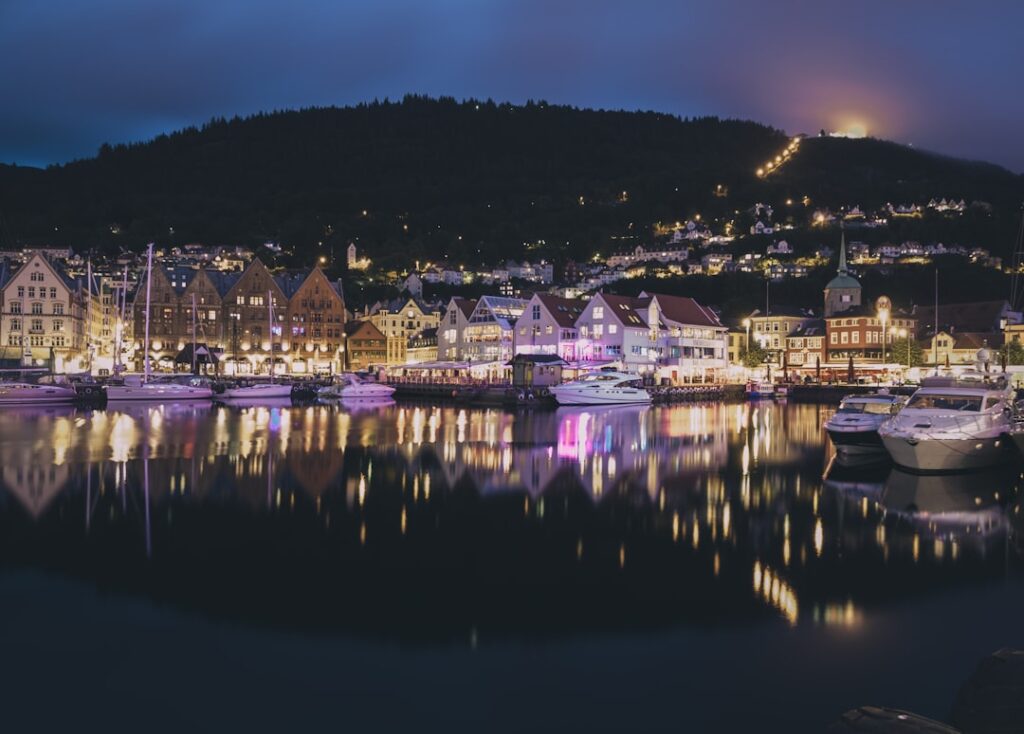
The NLS Norwegian Language School offers a range of Nynorsk courses designed to cater to learners of varying proficiency levels and goals. Our curriculum is structured to provide a comprehensive understanding of the Nynorsk language, from foundational grammar and vocabulary to advanced conversational skills and an appreciation for its cultural context.
Our Nynorsk offerings begin with Introduction to Nynorsk, a course suitable for absolute beginners. This class focuses on the fundamental pronunciation, basic sentence structure, and essential vocabulary needed for everyday interactions. Following this, the Nynorsk Essentials course builds upon this foundation, delving deeper into Nynorsk grammar, common phrases, and practical scenarios such as ordering food, asking for directions, and introducing oneself.
For those aiming for greater fluency, we offer Intermediate Nynorsk. This course emphasizes developing reading comprehension of Nynorsk texts and improving spoken communication. Students will engage with more complex grammatical structures, expand their vocabulary related to a wider range of topics, and practice constructing more nuanced sentences.
Our Advanced Nynorsk program targets learners who have a solid grasp of the language and wish to refine their skills. This course focuses on advanced literary and journalistic texts, idiomatic expressions, and sophisticated conversational strategies. It aims to empower students to discuss abstract concepts and participate in more in-depth discussions in Nynorsk.
In addition to these general proficiency courses, NLS Norwegian Language School also provides specialized Nynorsk instruction. These may include Nynorsk for Academic Purposes, designed for students planning to study in Norwegian institutions where Nynorsk is prevalent, and Nynorsk for specific professions, tailored to individuals who need Nynorsk for their work in particular sectors.
All our Nynorsk courses are taught by experienced instructors with a deep knowledge of the language and its nuances. We employ a blended learning approach, combining structured lessons with interactive exercises, real-world materials, and opportunities for authentic communication. Our goal is to equip students not only with linguistic proficiency but also with the confidence to use Nynorsk effectively in various settings.
The secret to understanding rural Norwegian dialects is not a singular revelation, but rather a layered approach involving a shift in perspective, an understanding of linguistic evolution, and a willingness to engage with the diverse tapestry of Norwegian spoken traditions. While standard Norwegian, both Bokmål and Nynorsk, provides a framework, the dialects spoken outside of the major urban centers possess their own unique rhythms, vocabularies, and grammatical structures that can, at first glance, appear formidable. Demystifying these dialects requires an appreciation for their historical roots, their geographical variations, and the personal narratives they carry.
The remarkable diversity of Norwegian dialects can be traced back to the country’s long and complex history. For centuries, Norway was a collection of relatively isolated communities, each developing its own linguistic characteristics influenced by local geography, historical events, and interactions with neighboring regions or external powers.
Old Norse as the Common Ancestor
All modern Norwegian dialects, as well as Icelanders’ and Faroese, descend from Old Norse, the language of the Vikings. This shared ancestry means that underlying grammatical structures and core vocabulary often exhibit similarities, even when surface pronunciations and word forms differ significantly. Understanding this common origin provides a bedrock for recognizing patterns and connections across dialects.
Viking Migrations and Settlement Patterns
The extensive Viking voyages and subsequent settlements across the North Atlantic, and within Norway itself, played a crucial role in shaping dialectal distribution. Different groups of Vikings carried their linguistic variations with them, leading to the establishment of distinct dialectal families in various regions of Norway. For instance, west coast dialects often show strong connections to older Old Norse features.
Medieval Isolation and Limited Centralization
For much of Norway’s medieval period and into the early modern era, communication and travel between regions were challenging. This isolation allowed local dialects to flourish and diverge without the homogenizing influence of a strong central authority or widespread written communication. This historical reality is key to understanding why even neighboring valleys might have distinct ways of speaking.
External Influences Over Time
While isolation was a primary driver, external influences also contributed to dialectal divergence. Sweden’s proximity and historical ties, Denmark’s centuries-long rule, and later, international contact, each left subtle imprints on various Norwegian dialects, often in the form of loanwords or shifts in pronunciation. Recognizing these influences can provide clues to a dialect’s history.
Phonetic and Phonological Variations
Perhaps the most immediately noticeable aspect of dialectal difference lies in pronunciation. Differences in vowels, consonants, and intonation patterns are what often make a dialect instantly identifiable to native speakers and a source of considerable challenge for learners.
Vowel Shifts and Quality
Many dialects exhibit distinct vowel shifts compared to standard Norwegian. For example, the long ‘a’ sound in standard Norwegian might be pronounced as ‘å’ or ‘æ’ in certain dialects. The quality of vowels, whether they are more open or closed, nasalized, or diphthongized, can also vary significantly, leading to words sounding quite different.
Examples of Vowel Variation
Consider the word “hus” (house). In some western dialects, the ‘u’ might be pronounced with a more rounded or fronted sound, akin to a French ‘u’. In other dialects, the word might be pronounced with a shorter, sharper vowel, or even with a slight diphthongization. Similarly, the pronunciation of words containing ‘ei’ or ‘øy’ can vary greatly, with some dialects retaining older diphthongs and others simplifying them.
Consonant Realizations and Palatalization
Consonant sounds also undergo significant transformations. Some dialects feature dentalization, where ‘t’ and ‘d’ sounds are articulated with the tongue against the teeth. Others may exhibit lenition, where consonants become softer or even disappear between vowels. Palatalization, where consonants develop a ‘y’ sound before them (like the ‘k’ in “kirkje” becoming something like ‘ch’ in church), is another common feature.
The Role of ‘R’
The pronunciation of the ‘r’ sound is a particularly prominent point of divergence. Some dialects use a trilled ‘r’ (alveolar trill), similar to Spanish or Italian. Others employ a uvular ‘r’ (like in French or German). And some dialects feature a retroflex ‘r’, where the tongue is curled back. This variation in ‘r’ pronunciation can significantly alter the sound of many words.
Stress and Intonation Patterns
Beyond individual sounds, the rhythm and melody of speech, known as prosody, differ considerably between dialects. Some dialects have a more singsong quality, with distinct pitch contours, while others are flatter. The placement of stress within words can also sometimes differ, leading to confusion for those accustomed to standard pronunciation.
The “Melody” of Each Dialect
Learning to recognize and even mimic these intonation patterns is crucial for genuine comprehension. It’s not just about understanding the words, but about grasping the underlying musicality that signals regional origin and emotional tone. What might sound like an unusual emphasis to an outsider is often a deeply ingrained feature of a dialect’s “melody.”
Lexical Differences and Unique Vocabulary
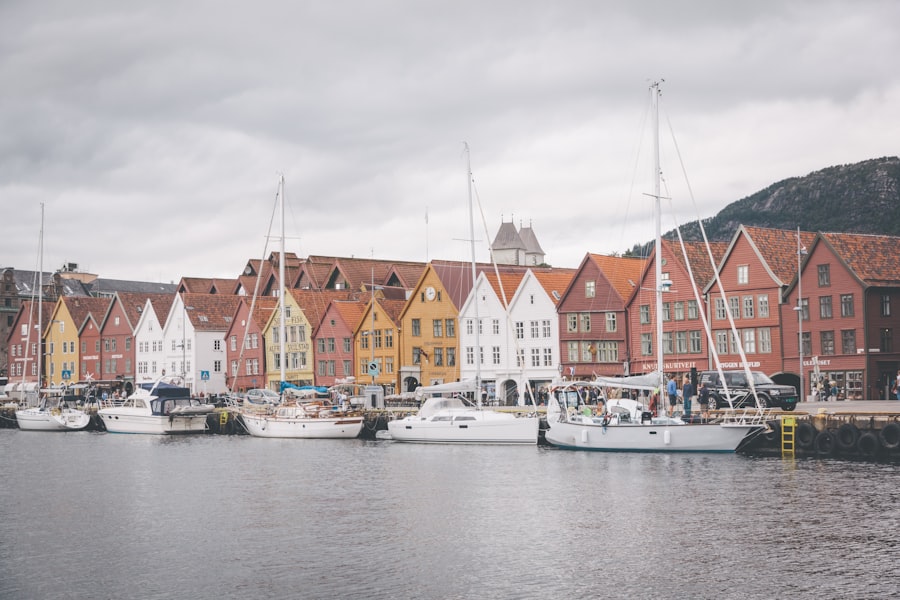
Beyond pronunciation, the vocabulary employed in rural Norwegian dialects presents another layer of complexity. Many dialects have retained older words, developed unique terms for local phenomena, or adopted loanwords that have not become part of the standard language. This rich lexicon is a treasure trove of linguistic history.
Archaic Words and Regionalisms
Many rural dialects preserve words that have fallen out of use in major urban areas or in standard written Norwegian. These can include terms for tools, agricultural practices, natural features, or social customs that are specific to the region. These words offer direct insights into the historical occupations and daily lives of the communities.
Specific Examples
For instance, a word for a particular type of fishing net might exist in a coastal dialect that is entirely unknown in an inland region, or a specific term for a type of snow formation might be used in a mountain dialect that is unfamiliar elsewhere. These are not merely synonyms; they represent distinct concepts and ways of categorizing the world.
Terms for Local Flora and Fauna
Rural communities often develop very specific terminology for the plants, animals, and geological features in their immediate environment. These terms can be incredibly detailed and may reflect a deep, practical knowledge of the local ecosystem, far beyond what is captured in general Norwegian.
Local Knowledge Embodied in Words
A farmer in a particular valley might have several words for different stages of growth of a local weed, or a fisherman might have a precise vocabulary for the various types of seaweed found in their area. These are not just random words; they are linguistic manifestations of accumulated local expertise.
Loanwords from Neighboring Languages and Historical Influences
As mentioned earlier, historical interactions with neighboring regions have also contributed to dialectal lexicons. Loanwords from Sami languages in the north, Swedish in the east, and even German or Dutch through historical trade routes can be found in specific dialects, adding another layer to their distinctiveness.
Tracing Historical Connections Through Vocabulary
The presence of a particular loanword can act as a linguistic marker, revealing historical trade patterns or periods of cultural exchange. For example, certain coastal dialects might contain words of Dutch origin related to seafaring, while northern dialects may have a richer vocabulary of Sami origin related to animal husbandry.
From grammar to fluency: Perfect your Nynorsk skills with the dedicated teachers at NLS Norwegian Language School.
Grammatical Peculiarities
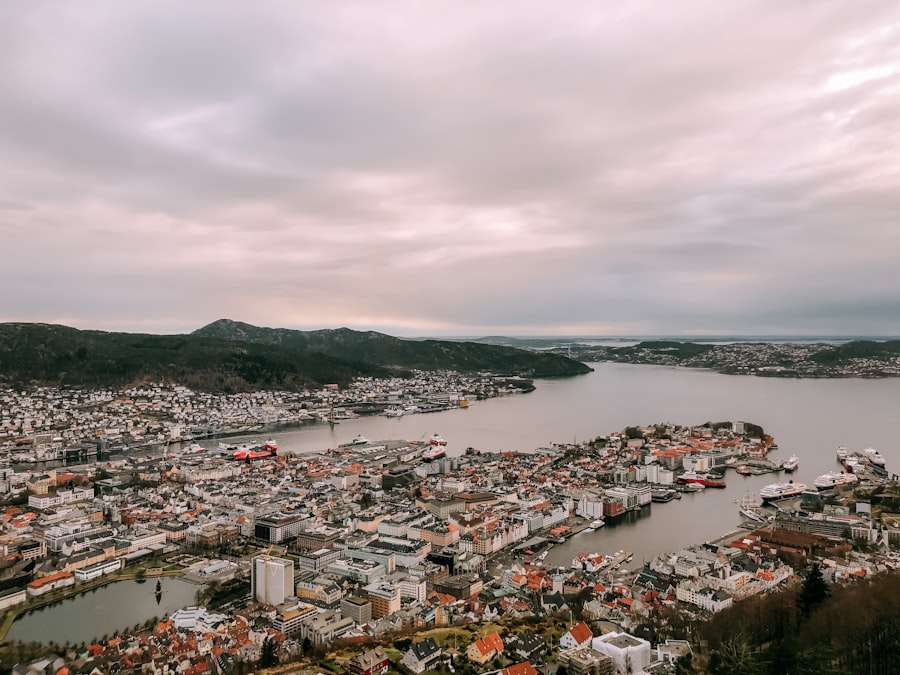
While most Norwegian dialects share a common grammatical foundation, there are notable deviations in sentence structure, verb conjugation, and the use of prepositions and articles that can significantly affect comprehension.
Verb Conjugation and Tense Usage
Dialects can differ in how verbs are conjugated, particularly in past tense and participle forms. Some dialects may retain older or more complex conjugations than standard Norwegian, while others might simplify them. The use of auxiliary verbs in forming tenses can also vary.
Regional Verb Forms
For example, the past participle of “å skrive” (to write) is “skrevet” in standard Norwegian. However, in some dialects, it might be “skrivi” or “skrive”. The past tense of “å gjere” (to do) can also present variations, with some dialects using forms that are less common in standard usage.
Pronoun Usage and Case Systems
The forms of pronouns can also differ, particularly in the possessive and objective cases. Some dialects might retain older case distinctions that have largely disappeared in standard Norwegian, or they may have developed entirely new forms.
Personal Pronoun Variations
Consider the difference in how personal pronouns are used and declined. While standard Norwegian uses forms like “meg” (me), “deg” (you), “ham” (him), “henne” (her), “oss” (us), “dykk” (you plural), and “dei” (them), dialects can exhibit variations in these forms, such as using “mæ,” “dæ,” or different plural forms.
Gender Agreement and Article Usage
The grammatical gender of nouns and the subsequent agreement with articles and adjectives can be a source of dialectal variation. Some dialects may have different gender assignments for certain nouns compared to standard Norwegian, or they might use definite articles in different ways.
Definite Articles in Different Forms
The definite article in Norwegian can be suffixed to the noun. The form of this suffix can vary significantly. For instance, the masculine definite article “-en” in standard Norwegian might appear as “-a” or “-i” in some dialects, leading to distinctly different pronunciations of definite nouns.
Strategies for Understanding Rural Dialects
| Dialect | Features |
|---|---|
| Trøndelag | Use of retroflex consonants, vowel reduction |
| West Telemark | Preservation of Old Norse features, pitch accent |
| Valdres | Distinctive intonation patterns, preservation of archaic vocabulary |
Approaching rural Norwegian dialects requires patience, an open mind, and a willingness to engage with the language beyond the textbook. It’s about embracing the regional character and recognizing that language is a living, evolving entity.
Immerse Yourself in Authentic Speech
The most effective way to understand rural dialects is to expose yourself to them as much as possible. This means seeking out audio and video resources, listening to local radio stations, watching regional television programs, and, if possible, spending time in rural communities and conversing with locals.
Beyond Standard Norwegian Media
Actively search for content that intentionally showcases regional dialects. This might include documentaries about rural life, folk music recordings, or even specialized podcasts that focus on dialectal speech. The more you hear, the more your ear will become attuned to the nuances.
Focus on Context and Non-Verbal Cues
When encountering unfamiliar vocabulary or grammatical structures, pay close attention to the surrounding context. Non-verbal cues, such as a speaker’s tone of voice, gestures, and facial expressions, can provide significant clues to the meaning of their utterance.
The Importance of Situation
If you’re in a rural setting and someone uses a word you don’t recognize, consider where you are and what you are doing. Is it related to farming? Fishing? The local terrain? The situation itself will often narrow down the possibilities significantly.
Build a Core of Common Norwegian Understanding First
While understanding dialects is the goal, it is crucial to have a solid grasp of standard Norwegian (Bokmål or Nynorsk) first. This provides a foundational vocabulary and grammatical framework that will make it easier to identify and interpret dialectal variations.
The Bridge to Dialects
Think of standard Norwegian as the common bridge. Once you understand the main structure of the bridge, you can then start to see how the individual planks and railings (the dialectal variations) are constructed differently but still lead to the same destination.
Learn Key Dialectal Features Gradually
Instead of trying to master every dialect at once, focus on learning the characteristic features of a few specific dialects that are of particular interest to you, or those you are most likely to encounter. This makes the task more manageable and rewarding.
Targeted Learning Approaches
If you are interested in the dialects of Trøndelag, for example, research the common vowel shifts, unique vocabulary, and grammatical quirks prevalent in that region. This focused approach will yield faster and more practical results than a broad, unfocused exploration.
Be Patient and Don’t Be Afraid to Ask
Approaching dialect speakers with a genuine desire to learn and understand will often be met with warmth and helpfulness. Most people are proud of their dialects and are happy to share their linguistic heritage, provided the interest is sincere.
The Power of Genuine Curiosity
When you encounter something you don’t understand, a polite “Unnskyld meg, kan du forklare hva det betyr?” (Excuse me, can you explain what that means?) or “Jeg lærer meg dialekten, hva betyr det ordet?” (I am learning the dialect, what does that word mean?) can open doors. Frame your questions with curiosity, not criticism.
Recognize the Underlying Unity
Ultimately, the secret to understanding rural Norwegian dialects lies in recognizing that beneath the surface variations, there is a profound underlying unity. They are all expressions of the same language, shaped by history, geography, and the human need to communicate. By appreciating their diversity, we gain a richer and more nuanced understanding of Norway and its people.
The NLS Norwegian Language School is dedicated to providing comprehensive language education that extends to the rich linguistic landscape of Norway, including the foundational understanding of its written standards and the nuances of its spoken traditions. Our Nynorsk courses are carefully crafted to equip learners with the proficiency and confidence to engage with this vital aspect of Norwegian culture and communication.
Master the beauty of Nynorsk with expert guidance at NLS Norwegian Language School—register today!