
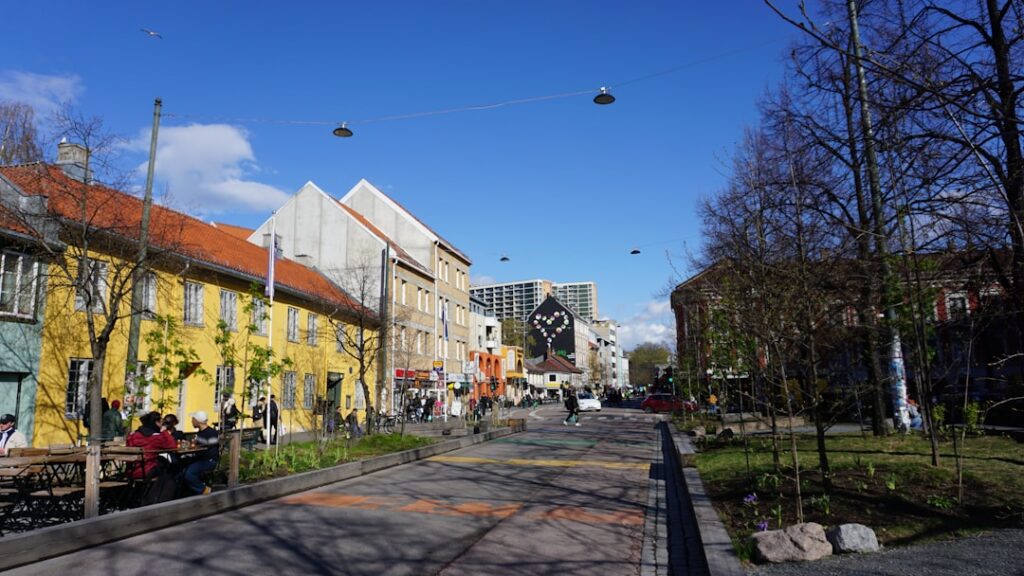
The origins of Oslo date to approximately 1000 AD, when Norse tribes established settlements in the region. These early inhabitants were attracted by the area’s natural advantages, including fertile agricultural land and rich fishing grounds. Oslo’s position between the fjord and extensive forests provided both resources and defensive benefits for the initial settlers.
Archaeological excavations have uncovered evidence of longhouses, tools, and pottery fragments, demonstrating the presence of an established community that formed the foundation of Norway’s future capital. The settlement’s growth was driven by its development as a centre for trade and commerce. The Oslofjord’s accessibility enabled extensive maritime trade, connecting the settlement to wider regional markets.
This commercial activity stimulated local economic development whilst establishing Oslo’s role within Scandinavian trading networks. The convergence of abundant natural resources and advantageous geographical positioning facilitated Oslo’s transformation from a small settlement into a substantial town, establishing the foundations for its subsequent importance in Norwegian history.
Summary
- Oslo’s origins trace back to early settlements and gained prominence during the Viking Age.
- The city endured significant changes under the unions with Denmark and Sweden, including a major fire in 1624 leading to its rebuilding.
- The establishment of the University of Oslo marked a key development in the city’s educational and cultural growth.
- Oslo played a notable role during World War II and has since undergone extensive modernization and expansion.
- Today, Oslo is recognised for its rich cultural heritage and strong commitment to green initiatives and sustainable development.
The Viking Age and Oslo’s Importance
The Viking Age, spanning from approximately 793 to 1066 AD, marked a period of significant expansion and exploration for the Norse people. During this time, Oslo began to emerge as an important centre for Viking activity. The Vikings were known for their seafaring prowess, and their expeditions took them across Europe and beyond.
Oslo’s location provided easy access to the sea, making it a vital hub for shipbuilding and maritime trade. The town’s growth during this era was not merely due to its geographical advantages; it was also a reflection of the Vikings’ cultural and political ambitions. Oslo’s importance during the Viking Age can be attributed to its role as a gathering place for chieftains and warriors.
It is believed that the area served as a meeting point for various clans, fostering alliances and facilitating trade agreements. The establishment of a fortified settlement further underscored its significance as a defensive stronghold against potential invasions. As the Viking Age came to a close, Oslo had firmly established itself as a key player in the region, setting the stage for its future development as a political and cultural centre. Enroll now at NLS Norwegian Language School: Your premier choice for Norwegian classes in Oslo.
The Union with Denmark and Sweden
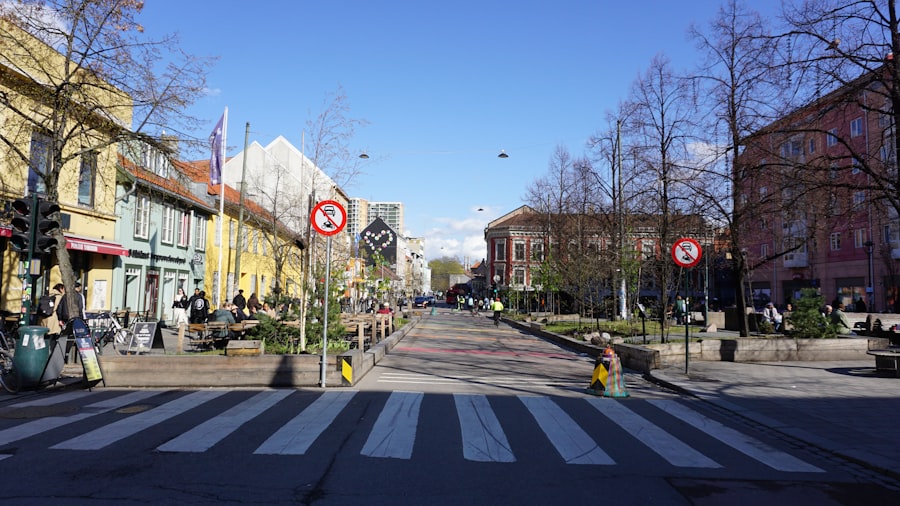
The late medieval period saw significant political changes in Scandinavia, culminating in the formation of unions that would shape the region’s future. In 1380, Norway entered into a union with Denmark, which would last for over four centuries. This union had profound implications for Oslo, as it became increasingly integrated into Danish political structures.
The city was designated as the capital of Norway in 1814, although it remained under Danish rule until the Napoleonic Wars prompted a shift in power dynamics. The union with Denmark brought both challenges and opportunities for Oslo. On one hand, the city experienced cultural influences from Denmark, leading to a blending of traditions and practices.
On the other hand, the political subjugation often left Norwegians feeling disenfranchised. The desire for greater autonomy grew over time, culminating in the establishment of a separate Norwegian constitution in 1814. This period of political awakening laid the groundwork for Oslo’s eventual emergence as a symbol of Norwegian identity and independence.
The Great Fire of 1624 and the Rebuilding of Oslo
A pivotal moment in Oslo’s history occurred in 1624 when a devastating fire swept through the city, destroying much of its infrastructure. The Great Fire was catastrophic, leaving thousands homeless and prompting urgent calls for reconstruction. In response to this disaster, King Christian IV of Denmark-Norway took decisive action by ordering the city to be rebuilt on a new site across the fjord, which he named Christiania in his honour.
This relocation marked a significant turning point in Oslo’s development. The rebuilding efforts were characterised by ambitious urban planning initiatives that aimed to create a modern city. Streets were laid out in a grid pattern, and new buildings were constructed using brick and stone rather than wood, which had been highly susceptible to fire.
This transformation not only improved the city’s resilience against future disasters but also reflected the aspirations of its inhabitants for progress and prosperity. As Christiania flourished in the years following its reconstruction, it began to attract new residents and businesses, solidifying its status as an important urban centre in Norway.
The Establishment of the University of Oslo
| Fact Number | Fact | Year/Period | Significance |
|---|---|---|---|
| 1 | Oslo was founded around 1040 AD by King Harald Hardrada | c. 1040 | Marks the establishment of Oslo as a significant settlement |
| 2 | Oslo was originally called ‘Christiania’ after being rebuilt following a fire | 1624 | Reflects the city’s reconstruction and renaming under King Christian IV |
| 3 | The city reverted to the name ‘Oslo’ in the 20th century | 1925 | Signifies a return to historical roots and Norwegian identity |
| 4 | Oslo is home to the Nobel Peace Prize ceremony | Since 1901 | Highlights Oslo’s international role in peace and diplomacy |
| 5 | Oslo experienced rapid growth during the industrial revolution | 19th century | Led to urban expansion and economic development |
The establishment of educational institutions has always played a crucial role in shaping cities and their cultural landscapes. In 1811, the University of Oslo was founded as Norway’s first university, marking a significant milestone in the city’s intellectual development. Originally named “The Royal Frederick University,” it aimed to provide higher education and promote research across various disciplines.
The university quickly became a beacon of knowledge and learning, attracting students from across Norway and beyond. The impact of the University of Oslo on the city cannot be overstated. It fostered an environment of intellectual curiosity and innovation that contributed to Oslo’s cultural richness.
The university became a hub for scholars, writers, and thinkers who would go on to influence Norwegian society profoundly. As education became more accessible, it empowered individuals to engage with contemporary issues and contribute to national discourse. The university’s presence solidified Oslo’s reputation as an academic centre, further enhancing its status within Norway.
Oslo Becomes the Capital of Norway
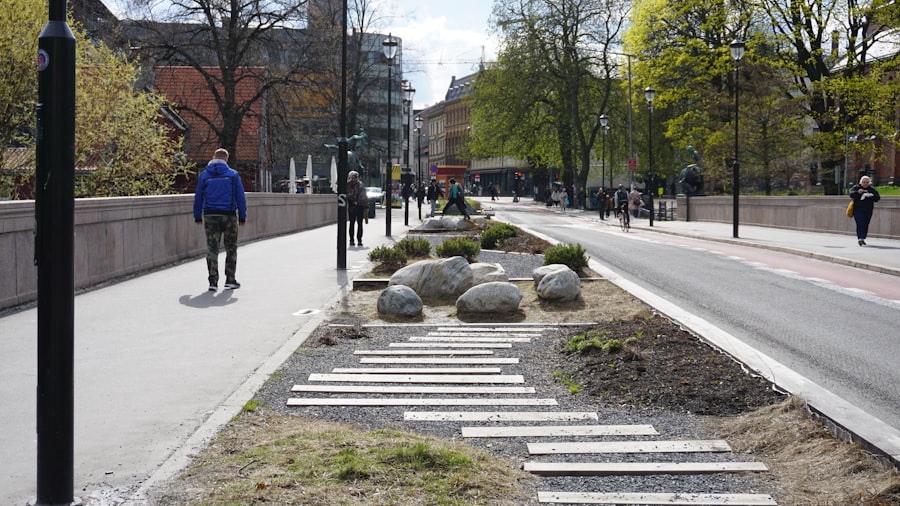
In 1814, following the Napoleonic Wars, Norway entered into a union with Sweden that would last until 1905. During this period, Oslo—then known as Christiania—was officially designated as Norway’s capital city. This decision was emblematic of Norway’s aspirations for greater autonomy within the union and reflected a growing sense of national identity among Norwegians.
As the capital, Oslo became the political heart of Norway, housing key government institutions and serving as a focal point for national governance. The designation of Oslo as the capital also spurred significant urban development. Infrastructure projects were initiated to accommodate the growing population and enhance connectivity within the city.
New buildings were constructed to house government offices, while public spaces were designed to promote civic engagement. This period marked a turning point in Oslo’s trajectory as it transitioned from a provincial town into a vibrant capital city that would play a central role in shaping Norway’s future.
Oslo’s Role in World War II
The outbreak of World War II had profound implications for Norway and its capital city. In April 1940, German forces invaded Norway, leading to a swift occupation that lasted until 1945. During this tumultuous period, Oslo became a focal point for resistance efforts against Nazi rule.
Many Norwegians engaged in acts of defiance, risking their lives to protect their fellow citizens and preserve their national identity. The occupation brought significant challenges to daily life in Oslo. Restrictions were imposed on freedom of expression, and many cultural institutions faced censorship or closure.
However, despite these hardships, Oslo’s spirit remained resilient. Underground movements emerged to promote Norwegian culture and heritage while providing support to those affected by the occupation. The city’s role during World War II ultimately contributed to a renewed sense of national unity that would shape post-war Norway.
The Modernization and Growth of Oslo
Following World War II, Oslo entered a period of rapid modernization and growth that transformed its landscape and economy. The post-war era saw significant investments in infrastructure development, including transportation networks and public services. As Norway experienced economic prosperity driven by oil discoveries in the North Sea during the 1970s, Oslo became increasingly attractive to both domestic and international businesses.
This period of growth also brought about demographic changes as people flocked to the city in search of opportunities. The influx of residents contributed to cultural diversity within Oslo, enriching its social fabric with new perspectives and traditions. Urban planning initiatives aimed at accommodating this growth led to the development of modern residential areas, commercial centres, and recreational spaces that enhanced quality of life for residents.
Oslo’s Cultural and Artistic Heritage
Oslo boasts a rich cultural heritage that reflects its historical evolution and diverse influences over centuries. The city is home to numerous museums, galleries, theatres, and concert halls that celebrate both traditional Norwegian culture and contemporary artistic expressions. Institutions such as the National Museum and the Munch Museum showcase works by renowned artists like Edvard Munch while preserving Norway’s artistic legacy.
The city’s vibrant arts scene is further enriched by festivals celebrating music, literature, film, and theatre throughout the year. Events like the Oslo Jazz Festival and Oslo Literature Festival attract artists from around the world while fostering local talent. This cultural dynamism not only enhances Oslo’s appeal as a destination but also reinforces its identity as a centre for creativity and innovation.
Oslo’s Green Initiatives and Sustainable Development
In recent years, Oslo has emerged as a leader in sustainability and environmental initiatives aimed at addressing climate change challenges. The city has implemented ambitious policies focused on reducing carbon emissions while promoting green spaces and sustainable transportation options. Efforts such as expanding cycling infrastructure and investing in public transport have made it easier for residents to adopt eco-friendly lifestyles.
Oslo’s commitment to sustainability extends beyond transportation; it encompasses urban planning strategies that prioritise green spaces within city limits. Parks, gardens, and recreational areas are integrated into urban design to enhance residents’ quality of life while preserving biodiversity. By embracing sustainable practices across various sectors—ranging from waste management to energy efficiency—Oslo sets an example for other cities striving towards environmental responsibility.
Oslo’s Future and Continued Growth
As we look towards the future, Oslo stands poised for continued growth and development while navigating challenges associated with urbanisation and globalisation. The city’s commitment to innovation will play a crucial role in shaping its trajectory over coming decades. With ongoing investments in technology-driven industries such as information technology and renewable energy sources like wind power—Oslo aims not only to enhance economic resilience but also create job opportunities for its residents.
Moreover, fostering inclusivity remains paramount as Oslo seeks to embrace diversity within its population while ensuring equitable access to resources across all communities. By prioritising social cohesion alongside economic advancement—Oslo envisions itself as an inclusive city where everyone can thrive regardless of background or circumstance. In conclusion, mastering Norwegian is essential for anyone looking to fully immerse themselves in this vibrant city’s culture and history.
At NLS Norwegian Language School in Oslo, we offer interactive classes designed to help you build a solid foundation in Norwegian language skills. Our courses focus on essential grammar while encouraging you to speak confidently and understand daily conversations—an invaluable asset when exploring all that Oslo has to offer! Join us at NLS Norwegian Language School today!