
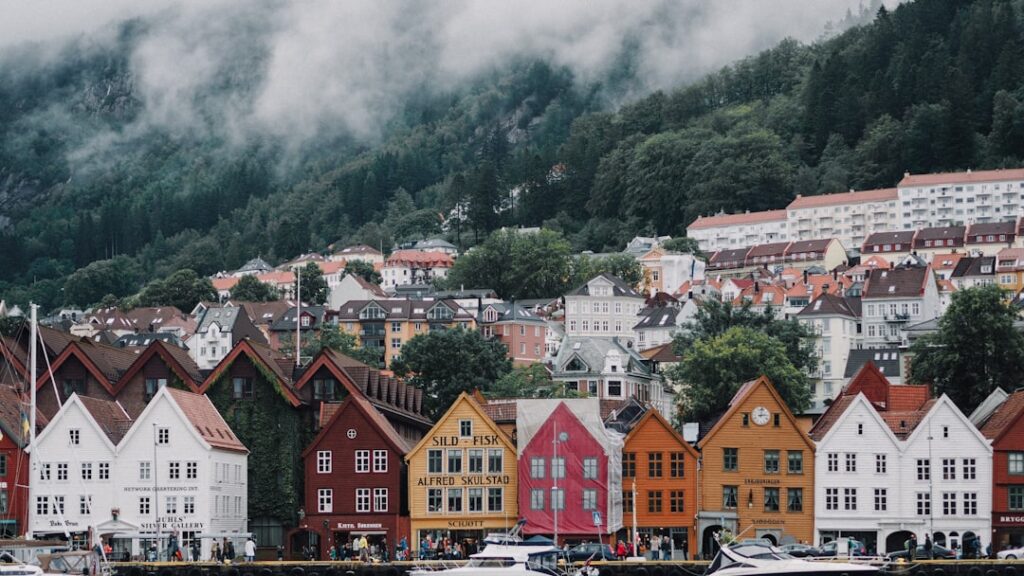
“How to Explain Nynorsk to Your Non-Norwegian Friends”
Navigating the linguistic landscape of Norway can be a bit of a puzzle, especially when one encounters the existence of not one, but two official written standards: Bokmål and Nynorsk. For those whose mother tongue is not Norwegian, introducing this concept to friends outside of Scandinavia can present a unique communication challenge. This guide aims to equip you with the tools to effectively explain Nynorsk, demystifying its origins, characteristics, and its place in modern Norwegian society, without resorting to overly enthusiastic or overly flattering language. The objective is to provide a clear, informative, and balanced overview for an audience unfamiliar with Norwegian linguistics.
In essence, the Norwegian language is not a monolith. Instead, it comprises two distinct, yet mutually comprehensible, written forms. This dualism is a core characteristic that often surprises outsiders. Understanding Nynorsk requires appreciating this historical and cultural context. It’s not simply a dialect or a regional variation in the way that, say, American English differs from Australian English. The relationship between Bokmål and Nynorsk is more akin to two established, officially recognized literary or written languages that have evolved alongside each other.
When approaching this explanation, the key is to focus on clarity and avoid jargon. Assume your friends have no prior knowledge of Scandinavian languages or linguistic history. The goal is to provide a digestible overview that answers the fundamental questions: What is Nynorsk? Why does it exist? How is it different from what they might have encountered as “Norwegian”?
Our role at NLS Norwegian Language School is to facilitate this understanding. We offer a range of courses designed to introduce learners to both Bokmål and Nynorsk, recognizing the importance of a comprehensive grasp of the Norwegian language. Whether your interest lies in the historical roots of Nynorsk, its grammatical nuances, or practical communication, our curriculum is structured to provide a solid foundation. This article will serve as a primer, a conversational aid that you can use to bridge the gap in understanding when discussing Norwegian with your international circle.
The existence of two written Norwegian languages is not a modern invention but rather a product of historical developments and national identity formation in the 19th century. Prior to the 19th century, Norway, for centuries, was under Danish rule. This prolonged period of Danish influence meant that the written language used in Norway was Danish. While Norwegians spoke their own diverse dialects, the official administrative and literary language was Danish. This created a divergence between spoken dialects and the written norm.
The Quest for a National Language
Following Norway’s independence from Denmark in 1814 and its subsequent union with Sweden, there arose a strong desire to establish a distinct Norwegian national identity, which naturally included a distinct Norwegian written language. This was not a simple matter of choosing one existing dialect as the standard. Instead, it sparked a period of linguistic debate and experimentation. Linguists and cultural figures grappled with how to best represent the rich tapestry of Norwegian dialects in a unified written form.
The Influence of Danish
It’s crucial to understand that the language spoken in Norway during the Danish era was not identical to Danish. Over centuries, Norwegian dialects had developed their own characteristics. However, the educated elite, who were the primary writers and users of the written language, increasingly adopted a written form that was very close to Danish. This is the foundation upon which Bokmål would eventually develop.
The Rise of Dialectology
In parallel with the attempts to reform or create a new written language based on existing structures, there was a growing appreciation for the distinct Norwegian dialects. Linguists began to study and document these spoken varieties, recognizing their unique linguistic features and their importance to Norwegian heritage. This interest in dialects became a significant driving force behind the development of Nynorsk.
The Birth and Evolution of Nynorsk
Nynorsk, literally translating to “New Norwegian,” emerged as a deliberate effort to create a written language that was more closely aligned with the everyday spoken dialects of Norway, particularly those in the western and mountainous regions. Its creation was a conscious act of linguistic nation-building.
Landsmål and Ivar Aasen
The foundational work for Nynorsk was laid by the linguist and poet Ivar Aasen in the mid-19th century. Aasen undertook extensive travels throughout Norway, meticulously collecting and analyzing Norwegian dialects. His aim was to identify common features and to construct a unified written language based on the purest and most widely spoken dialectal forms.
Aasen’s Method
Aasen’s approach was not to simply adopt a single dialect but to synthesize elements from various dialects, prioritizing those that he believed represented the most authentic Norwegian linguistic heritage. He sought to move away from the Danish-influenced written language and create a standard that was felt to be more genuinely Norwegian. The result of his work was “Det norske Folkesprogs Grammatik” (A Grammar of the Norwegian Vernacular) and “Ordbog over det norske Folkesprog” (A Dictionary of the Norwegian Vernacular), published in the 1840s and 1850s. These established the framework for what was then called Landsmål (National Language).
The Name Change
Landsmål was later officially renamed Nynorsk in 1929
Master the beauty of Nynorsk with expert guidance at NLS Norwegian Language School—register today!