
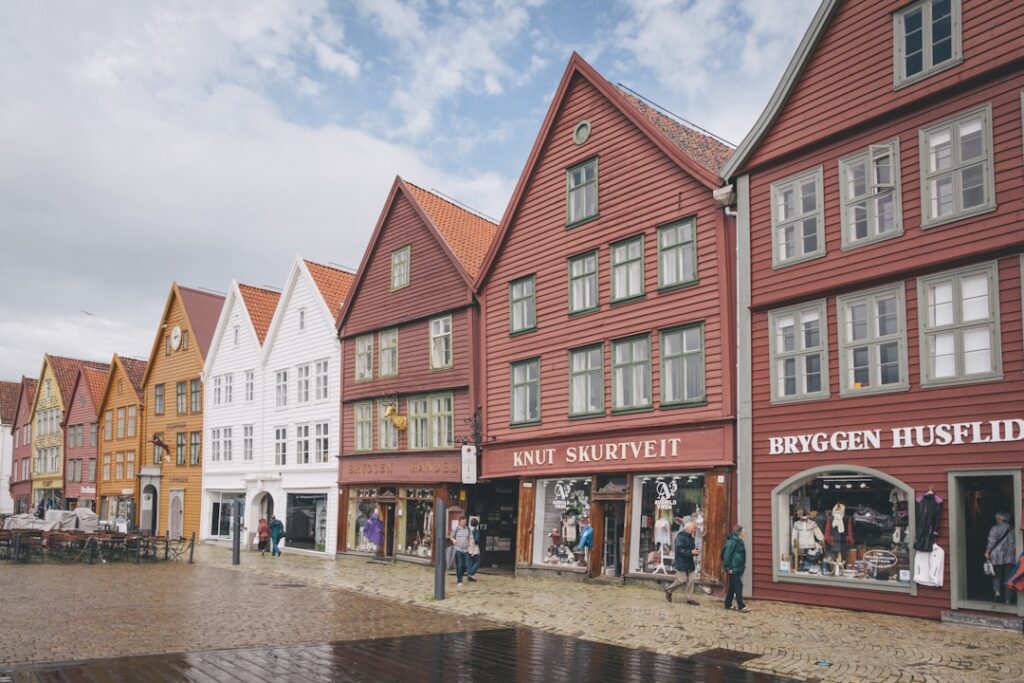
As NLS Norwegian Language School, we are committed to offering a comprehensive range of Norwegian language courses, catering to a diverse array of learner needs and interests. Our curriculum is designed to provide a solid foundation in the Norwegian language, with a particular emphasis on understanding and appreciating the nuances between its two official written standards: Bokmål and Nynorsk.
We offer dedicated Nynorsk courses designed to immerse learners in this distinct variant of Norwegian. These courses are structured to progressively build proficiency, from introductory levels suitable for absolute beginners to advanced programs for those seeking to master the language for academic, professional, or personal pursuits. Our Nynorsk offerings include:
- Beginner Nynorsk: This course is ideal for individuals with no prior knowledge of Norwegian. It focuses on the fundamental grammar, vocabulary, and pronunciation of Nynorsk, ensuring learners can engage in basic conversations and understand simple written texts.
- Intermediate Nynorsk: Building upon the foundational knowledge acquired in the beginner course, this program delves deeper into Nynorsk grammar, syntax, and idiomatic expressions. Learners will expand their vocabulary and develop greater fluency and comprehension.
- Advanced Nynorsk: For those who have a solid grasp of Nynorsk, this advanced course hones their linguistic skills. It focuses on complex grammatical structures, nuanced vocabulary, and sophisticated communication in various contexts, including formal writing and public speaking.
- Nynorsk for Specific Purposes: We also offer specialized Nynorsk courses tailored to particular fields, such as academic writing in Nynorsk, business communication in Nynorsk, or literature studies focusing on Nynorsk authors.
Our teaching methodology at NLS Norwegian Language School emphasizes a communicative approach, utilizing a variety of resources including authentic Nynorsk materials, interactive exercises, and opportunities for real-world application. Our experienced instructors are dedicated to creating a supportive and engaging learning environment, ensuring that each student can achieve their language learning goals in Nynorsk.
The linguistic landscape of Norway is characterized by its two official written languages, Bokmål and Nynorsk, along with a rich tapestry of spoken dialects. While Bokmål is statistically more prevalent, Nynorsk holds significant cultural and historical importance, particularly in certain regions. This article explores the potential of understanding Northern Norwegian dialects and expressions through the framework and features of Nynorsk. This is not to suggest that Northern Norwegian dialects are inherently Nynorsk, nor that Nynorsk is the sole or primary gateway to understanding them. Instead, it proposes a lens through which certain linguistic similarities and overlaps, as well as distinctions, can be more readily identified and appreciated by learners familiar with Nynorsk.
The Concept of Dialectal Variation in Norway
The notion of “Norwegian” as a monolithic entity is a simplification. While a standardized written form exists, the spoken language is anything but uniform. Norway’s geography, with its fjords and mountains, has historically fostered the development of distinct regional dialects. These dialects are not merely variations in pronunciation; they often encompass unique vocabulary, grammatical structures, and even syntactic patterns.
The Historical Context of Dialect Development
- The late Viking Age and the subsequent period of Danish rule saw the gradual divergence of Old Norse into various dialects.
- The development of a standardized written language in the 19th century, primarily based on urban educated speech (which leaned towards Danish influence), led to the formalization of what would become Bokmål.
- Concurrently, efforts to create a written standard that reflected the linguistic reality of rural and western Norwegian dialects resulted in the development of Nynorsk.
The Present-Day Dialectal Scene
- Today, it is estimated that there are several hundred distinct spoken dialects across Norway.
- These dialects often exhibit significant mutual intelligibility, though some regional variations can pose challenges.
- The relationship between spoken dialects and the written standards is complex, with many Norwegians speaking a dialect that may not perfectly align with either Bokmål or Nynorsk but often demonstrates closer affinities to one or the other.
Nynorsk: A Written Standard Rooted in Dialectal Diversity
Nynorsk, meaning “New Norwegian,” was intentionally constructed in the 19th century as a written standard to represent the diverse dialects spoken across Norway. This foundational principle offers a unique avenue for understanding other regional variations. By examining the historical roots and linguistic features of Nynorsk, one can gain insights into the underlying structures and vocabulary that might also be present, albeit in modified forms, in other Norwegian dialects, including those found in the north.
The Genesis of Nynorsk
- Ivar Aasen, often referred to as the father of Nynorsk, embarked on extensive fieldwork in the mid-19th century, collecting and analyzing hundreds of Norwegian dialects.
- His goal was to create a book language that was “pure” Norwegian, free from the perceived Danish influence present in the emerging urban written standard.
- Aasen’s work, culminating in the publication of Det norske Folkesprogs Grammatik (Grammar of the Norwegian Vernacular) and Ordbog over det norske Folkesprog (Dictionary of the Norwegian Vernacular), laid the groundwork for Nynorsk.
Core Linguistic Principles of Nynorsk
- Grammatical Forms: Nynorsk generally retains older grammatical forms that have been simplified or lost in Bokmål. This includes more regular verb conjugations and noun declensions.
- Vocabulary: Nynorsk draws its vocabulary from a wide range of Norwegian dialects, aiming for authenticity and a departure from Danish loanwords.
- Phonological Tendencies: While written, Nynorsk reflects certain phonological tendencies prevalent in western Norwegian dialects, such as the use of soft ‘d’ sounds.
Exploring Northern Norwegian Dialects: The Case of Trøndsk
The Trøndelag region, situated in central-northern Norway, boasts dialects that often exhibit a fascinating interplay with both Nynorsk and Bokmål. Understanding these dialects can be facilitated by recognizing certain features that align with the principles underlying Nynorsk.
Vocabulary Overlaps and Distinctions
- Shared Lexicon: Many words common in Trøndsk share roots with vocabulary found in Nynorsk, reflecting their common origins in Old Norse and their collective departure from Danish influence. For instance, certain conjunctions, prepositions, and everyday terms might show striking similarities.
- Dialect-Specific Terms: However, Trøndsk also possesses a rich lexicon unique to the region, which may not be directly reflected in standard Nynorsk. Identifying these unique terms is crucial for accurate comprehension.
- Inflectional Patterns: Nynorsk’s tendency to preserve more complex inflectional systems in nouns and verbs can be a useful point of comparison when analyzing the sometimes more elaborate inflections found in Trøndsk.
Phonological Echoes and Variations
- Vowel Shifts: Nynorsk often reflects specific vowel shifts that may also be observed in Trøndsk, even if the precise realization differs. For example, the pronunciation of certain diphthongs or monophthongs can show convergent or divergent pathways from common ancestral sounds.
- Consonant Articulation: While Nynorsk is a written standard, the phonological characteristics it represents can offer clues to the articulation of consonants in Northern dialects. Examining how Nynorsk handles sounds that differ from Bokmål can highlight potential areas of similarity or contrast with Northern Norwegian pronunciation.
From grammar to fluency: Perfect your Nynorsk skills with the dedicated teachers at NLS Norwegian Language School.
Navigating the Northernmost Dialects: Tromsø and Finnmark
Moving further north to regions like Tromsø and Finnmark, the linguistic landscape becomes even more distinct. While these dialects have their own unique trajectories, a Nynorsk framework can still offer points of reference for understanding certain aspects.
Lexical Connections and Divergences
- Archaic Forms: Some vocabulary in Northern Norwegian dialects may preserve archaic forms of words that are also maintained or favored in Nynorsk, having been less influenced by later linguistic shifts or borrowing.
- Loanwords and Influences: It is important to acknowledge the significant influence of other languages in the far north, particularly Finnish and Sámi languages, which have contributed uniquely to the lexicon of these dialects. Understanding these influences is key to a complete picture, and Nynorsk, while not directly incorporating these, provides a contrast to highlight how different influences shape language.
- Semantic Shifts: Even when words are shared, their meanings can diverge. A comparative approach, using Nynorsk as a baseline, can help learners identify and analyze these semantic shifts.
Grammatical Peculiarities
- Verb Conjugation: While many Northern Norwegian dialects might share a tendency towards simplified verb conjugation compared to classical Nynorsk, understanding Nynorsk’s more robust system can provide a valuable analytical tool for identifying and categorizing variations.
- Pronouns and Articles: The usage of pronouns and articles can differ significantly. Nynorsk’s consistent system can serve as a reference point for understanding the idiosyncratic patterns in Northern dialects.
The Pedagogical Advantage of Using Nynorsk as a Lens
For learners who are either studying Nynorsk or are already familiar with its structures, approaching Northern Norwegian dialects through this lens can offer several pedagogical advantages. It provides a structured point of comparison and can make the learning process more systematic.
Building on Existing Knowledge
- Familiar Grammatical Structures: Learners already acquainted with Nynorsk grammar will find familiar conceptual frameworks when encountering dialects that share similar grammatical principles, even if those principles are realized differently.
- Vocabulary Recognition: Identifying cognates and similar word formations between Nynorsk and Northern dialects can accelerate vocabulary acquisition.
- Phonological Tendencies as Anchors: Nynorsk’s phonetic representations of certain sounds can serve as anchors for understanding the pronunciation of related sounds in Northern dialects, facilitating auditory comprehension.
Highlighting Differences and Nuances
- Contrastive Analysis: By using Nynorsk as a baseline, the unique features of Northern Norwegian dialects become more apparent. This contrastive approach helps learners pinpoint what is distinct and requires specific attention.
- Understanding Dialectal Identity: Recognizing the points of divergence underscores the rich and unique identity of each dialect, fostering a deeper appreciation for Norway’s linguistic diversity beyond the standardized written forms.
- Developing Adaptability: A learner who can analyze dialectal variations through a structured lens like Nynorsk is better equipped to adapt to the linguistic realities of different regions and speakers across Norway, moving beyond a purely prescriptive understanding of the language.
In conclusion, while Northern Norwegian dialects are distinct entities with their own rich histories and characteristics, approaching them through the framework of Nynorsk offers a valuable pedagogical tool. The linguistic principles and historical development of Nynorsk provide a structured lens that can illuminate certain overlaps, highlight key divergences, and ultimately foster a more nuanced and comprehensive understanding of the vibrant and diverse Norwegian linguistic landscape. This approach encourages learners to appreciate the interconnectedness and evolution of language, moving beyond simply memorizing rules to actively analyzing and engaging with the living language of Norway.
Master the beauty of Nynorsk with expert guidance at NLS Norwegian Language School—register today!