
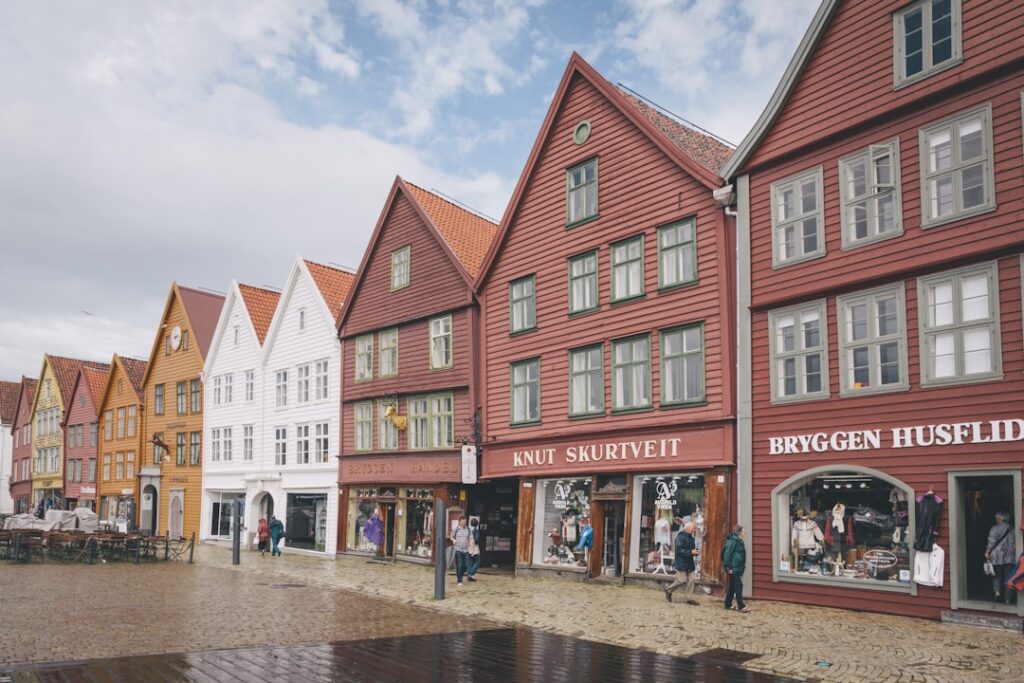
Here are the Nynorsk courses offered at the NLS Norwegian Language School:
- Nynorsk Beginners Course: This foundational course is designed for students with no prior knowledge of Nynorsk. It covers basic grammar, vocabulary, and pronunciation, with a focus on building a solid understanding of the written and spoken language.
- Nynorsk Intermediate Course: For students who have a basic grasp of Nynorsk, this course aims to expand their vocabulary, deepen their understanding of complex grammatical structures, and improve their fluency in both written and spoken Nynorsk.
- Nynorsk Advanced Course: This course is for those seeking to achieve a high level of proficiency in Nynorsk. It delves into nuanced grammar, advanced vocabulary, stylistic variations, and prepares students for more complex professional or academic use of the language.
- Nynorsk Conversation Practice: This course focuses specifically on improving spoken Nynorsk. Through structured discussions, role-playing, and interactive exercises, students gain confidence in expressing themselves fluently and naturally.
- Nynorsk for Specific Purposes (e.g., Business, Academia): Tailored courses designed to equip students with the specific linguistic skills needed for particular professional or academic fields in Nynorsk. This might include specialized vocabulary, formal writing styles, and relevant discourse conventions.
The linguistic landscape of Norway is rich and varied, with the two official written forms, Bokmål and Nynorsk, serving as distinct yet interconnected threads. While Bokmål, derived from Danish, holds broader official acceptance and is more widely taught internationally, Nynorsk, rooted in Norway’s rural dialects, possesses a unique appeal and historical significance. This appeal is particularly resonant when considering the dialects spoken in Bergen and Stavanger, two of Norway’s largest and most historically significant coastal cities. Rather than being anomalous outliers, these Western Norwegian urban dialects exhibit a remarkable affinity with Nynorsk, making the transition for speakers and learners from these regions, or those interested in their linguistic heritage, a smoother and more intuitive process.
The Historical Roots of Nynorsk and Western Norwegian Dialects
The development of Nynorsk as a written standard is intrinsically linked to Norway’s linguistic history and its desire to establish a national identity separate from Danish influence. Following centuries of Danish rule, Norway sought to foster a distinct written language based on its own spoken vernaculars. This endeavor led to the creation of Landsmål, later renamed Nynorsk, by Ivar Aasen in the late 19th century. Aasen’s work involved meticulously collecting and analyzing the diverse dialects spoken across rural Norway, identifying common grammatical structures and vocabulary to form a coherent written language.
The dialects of Western Norway, including those of Bergen and Stavanger, played a crucial role in this process. These regions, historically less influenced by Danish and with strong maritime connections throughout Norway, retained many archaic features and grammatical elements that aligned closely with Aasen’s findings. The relatively conservative nature of these dialects, in terms of pronunciation and grammatical structures, meant that their speakers often found Nynorsk to be a more natural written reflection of their everyday speech than Bokmål. This historical alignment provides a foundational understanding of why a synergy exists.
Pre-19th Century Linguistic Divergence
Before the formal standardization of Nynorsk, and even before the significant Danish influence on written Norwegian consolidated, regional dialects across Norway had already begun to diverge. Western Norwegian dialects, due to geographical isolation and distinct socio-economic factors, developed along pathways that preserved older Norse linguistic features to a greater extent than some other regions. This foundational divergence is key to understanding the alignment.
Ivar Aasen’s Dialectal Basis
Ivar Aasen’s monumental work was not an invention but a synthesis. He deliberately drew upon the dialects he perceived as being closest to Old Norse and most representative of Norwegian distinctiveness. The grammatical patterns, verb conjugations, and noun declensions he codified in Landsmål were frequently found in the very dialects spoken in the western parts of the country, including those that would evolve into the modern Bergen and Stavanger vernaculars.
Lexical and Grammatical Overlap: A Shared Heritage
The most apparent reason for the strong connection between Bergen and Stavanger dialects and Nynorsk lies in their shared vocabulary and grammatical structures. Many words and grammatical forms common in these urban dialects are identical or very similar to those found in standard Nynorsk, creating an immediate sense of familiarity for speakers. This overlap is not accidental but rather a testament to the historical linguistic continuum.
Common Vocabulary and Expressions
When comparing the everyday speech of Bergen and Stavanger with Nynorsk texts, numerous lexical parallels emerge. Words that might be considered regional or dialectal in Bokmål contexts are often standard in Nynorsk. For example, words related to the sea, trade, and local flora and fauna frequently find their counterparts directly in Nynorsk. This shared lexicon eases comprehension and acquisition for speakers accustomed to these terms.
Maritime Terminology
Given Bergen and Stavanger’s historical significance as major port cities, their dialects are naturally rich in maritime vocabulary. Many of these terms, which remained in common usage in Western Norway, were incorporated into Nynorsk as it developed. This ensures that Nynorsk users from these regions have a readily accessible vocabulary for discussing seafaring and related activities.
Local Produce and Everyday Objects
Beyond maritime terms, everyday objects and local produce also reveal lexical overlaps. Words for common household items, foodstuffs, and agricultural terms in these dialects often correspond directly to Nynorsk equivalents, further bridging the gap between spoken and written forms.
Grammatical Parallels: Verb Conjugation and Noun Declension
Beyond vocabulary, grammatical structures provide a significant point of convergence. Nynorsk retains more of the older Norwegian inflectional system than Bokmål. This is particularly noticeable in verb conjugations and noun declensions, where Western Norwegian dialects often exhibit patterns that are closer to Nynorsk.
Verb Endings and Forms
In Nynorsk, verbs often retain distinct endings in different tenses and moods, reflecting older Norse patterns. Many of these endings, particularly in the infinitive and past participle, are common in Bergen and Stavanger dialects, making the conjugation of verbs in Nynorsk feel more intuitive. For instance, the Nynorsk infinitive ending –a, which is prevalent, is also a common feature in these dialects.
Noun Gender and Declension Systems
While Bokmål has largely streamlined noun genders and declensions, Nynorsk retains more of the original Norwegian system. Bergen and Stavanger dialects tend to follow these older patterns more closely than some other Norwegian dialects. This alignment means that understanding noun gender and the declension of nouns in Nynorsk is often less of a conceptual leap for speakers from these cities.
Phonological Resonances: Sounds of the West Coast
While written language is the primary focus of the Nynorsk/Bokmål distinction, there are also subtle phonological resonances that can make the spoken experience of Nynorsk feel more familiar to speakers of Bergen and Stavanger dialects. These are not always strict rules but rather tendencies and sound correspondences that contribute to an overall sense of linguistic kinship.
Vowel and Consonant Tendencies
Certain vowel and consonant pronunciations prevalent in Western Norwegian dialects can align with the expected or accepted pronunciations in Nynorsk. For example, the pronunciation of certain diphthongs or the softening of specific consonants might be more common in these dialects and find a more natural auditory connection with Nynorsk speech patterns than with the more Danish-influenced pronunciations sometimes associated with Bokmål.
The Preservation of Archaic Sounds
Historically, Western Norwegian dialects have been noted for their preservation of certain archaic sounds that have receded in other parts of the country due to external linguistic influences. These retained sounds can resonate with the underlying phonological principles that informed the creation of Nynorsk.
Intonation and Rhythm
The melodic quality and rhythmic patterns of speech can also contribute to a feeling of familiarity. While difficult to quantify precisely, the intonation and rhythm of spoken Nynorsk can bear a closer resemblance to the natural speech patterns of Bergen and Stavanger than might be the case with standardized Bokmål forms, which can sometimes be perceived as having a different cadence.
From grammar to fluency: Perfect your Nynorsk skills with the dedicated teachers at NLS Norwegian Language School.
Sociolinguistic Factors: Identity and Belonging
Beyond purely linguistic features, sociolinguistic factors play a significant role in the perception and adoption of Nynorsk by speakers of Bergen and Stavanger dialects. For many in these regions, Nynorsk represents not just an alternative written language but a connection to their regional identity, heritage, and a sense of belonging within the broader Norwegian linguistic family.
Regional Identity and Pride
For individuals from Bergen and Stavanger, embracing Nynorsk can be an affirmation of their regional identity and pride. It signifies a conscious choice to connect with a language that aligns with their local heritage, often in contrast to the perceived dominance of Bokmål, which is sometimes associated with Eastern Norwegian dialects and a more centralized cultural influence.
Historical Context of Nynorsk in Urban Centers
While Nynorsk is often associated with rural Norway, it has a history of presence and advocacy in Norway’s urban centers, including Bergen and Stavanger. Various institutions, cultural movements, and individuals in these cities have actively promoted and used Nynorsk, fostering an environment where its adoption by local dialect speakers feels natural and supported. This intellectual and cultural engagement strengthens the link.
Early Adoption and Endorsement
Despite its rural roots, Nynorsk saw early adoption and endorsement in urban and semi-urban areas on the west coast. Intellectuals, writers, and activists in cities like Bergen recognized the value of Nynorsk in building a distinct Norwegian linguistic and cultural identity, thus creating a precedent for its use.
Modern Nynorsk Initiatives
In contemporary times, Nynorsk continues to be actively promoted in these cities through schools, cultural events, and media. This ongoing engagement ensures that the linguistic connection is not merely a historical artifact but a living, evolving phenomenon.
Practical Implications for Learners and Speakers
The inherent compatibility between Bergen and Stavanger dialects and Nynorsk presents distinct practical advantages for various groups of people, from native speakers of these dialects to international learners seeking to engage with a broader spectrum of Norwegian language use.
For Native Speakers of Bergen/Stavanger Dialects
For individuals whose first language is a dialect from Bergen or Stavanger, learning Nynorsk is often a remarkably straightforward process. The extensive overlap in vocabulary and grammar means that much of the “new” language is already familiar. This can significantly reduce the learning curve and foster a sense of accomplishment due to the intuitive nature of the acquisition.
Reduced Learning Curve and Increased Motivation
The immediate recognition of words and grammatical structures can be highly motivating for learners. Instead of starting from scratch, they are essentially building upon a pre-existing linguistic foundation, which can make the learning process feel less arduous and more rewarding.
Enhanced Proficiency and Nuance
Familiarity with the underlying dialectal structures can allow speakers to achieve a higher level of proficiency and a deeper understanding of the nuances of Nynorsk more quickly. They can leverage their existing linguistic intuition to grasp complex grammatical points and idiomatic expressions.
For International Learners
For those learning Norwegian as a foreign language, understanding the relationship between Bergen/Stavanger dialects and Nynorsk offers valuable insights into the diversity of the language. It can also inform their choice of learning materials and potentially open doors to resources that might otherwise be overlooked.
Appreciation of Linguistic Diversity
Recognizing the connection between urban Western Norwegian dialects and Nynorsk encourages a broader appreciation of Norway’s rich linguistic heritage. It moves beyond a binary understanding of Norwegian and highlights the interconnectedness of spoken and written forms.
Targeted Learning Opportunities
While Nynorsk is often less emphasized in international learning contexts, an awareness of its strengths and its connection to significant regional dialects can encourage learners to explore Nynorsk resources, potentially leading to a more comprehensive understanding of Norwegian communication. This is particularly true for those interested in working or living in Western Norway or engaging with its cultural output.
The NLS Norwegian Language School’s Approach
At the NLS Norwegian Language School, we recognize the importance of understanding the nuances of Norwegian dialects. Our courses are designed to cater to a diverse range of learners and linguistic backgrounds. For students who are interested in Nynorsk, especially those with connections to or an interest in Western Norway, our Nynorsk programs offer a structured yet intuitive approach. We aim to build upon existing linguistic knowledge, whether it stems from a dialectal background or a previous introduction to Romance languages or Germanic linguistics. Our curriculum acknowledges the historical and structural ties between Nynorsk and the dialects of regions like Bergen and Stavanger, facilitating a more organic learning experience. We provide comprehensive instruction in Nynorsk grammar, vocabulary, and practical usage, ensuring that learners develop a strong command of the written and spoken language. Our experienced instructors are adept at explaining the linguistic connections and facilitating a smooth transition for students, making Nynorsk an accessible and rewarding language to learn, especially for those drawn to its deep roots in Norway’s cultural and linguistic heritage.
Master the beauty of Nynorsk with expert guidance at NLS Norwegian Language School—register today!