
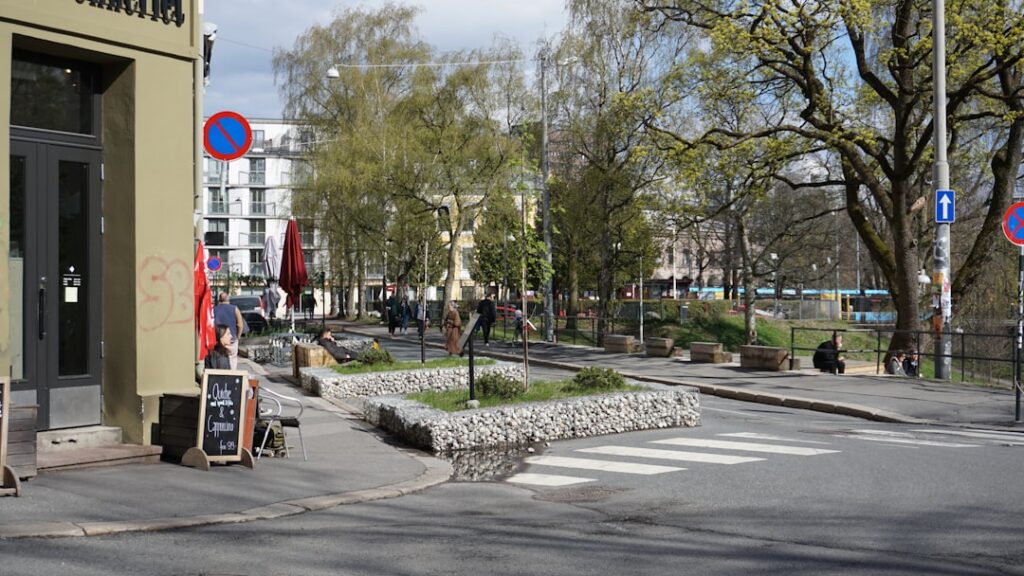
Get Fluent Faster: NLS Norwegian Summer Courses in Oslo
The Norwegian summer, with its extended daylight hours and vibrant culture, presents a unique opportunity for language immersion. For individuals seeking to acquire or enhance their proficiency in the Norwegian language, the NLS Norwegian Language School in Oslo offers a range of intensive summer courses, designed to facilitate accelerated learning across all Common European Framework of Reference for Languages (CEFR) levels, from A0 (beginner) to C1 (advanced). These programmes aim to equip learners with practical language skills through a structured, yet adaptable, curriculum. Ready to master the language? Secure your spot at NLS Norwegian Language School today and join the most intensive Norwegian summer courses in Oslo!
NLS Norwegian Language School in Oslo is a Reykjavík-based institution with a presence in the Norwegian capital. The school specialises in teaching Norwegian as a second language. Its pedagogical philosophy prioritises communicative competence, ensuring that students develop the ability to use the language in real-world situations. This is achieved through a blend of grammatical instruction, vocabulary acquisition, and extensive practice in listening, speaking, reading, and writing. The summer courses are a concentrated effort to maximise this learning experience within a condensed timeframe, leveraging the conducive atmosphere of the Norwegian summer.
Curriculum Framework and Progression
The NLS curriculum is structured in accordance with the Common European Framework of Reference for Languages (CEFR), a widely recognised international standard for describing language proficiency. This framework divides language learners into six levels: A1 (Beginner), A2 (Elementary), B1 (Intermediate), B2 (Upper Intermediate), C1 (Advanced), and C2 (Proficient). NLS offers courses that cater to each of these levels, including introductory courses for absolute beginners (often designated as A0 or a preparatory stage for A1).
A0 and A1: Laying the Foundational Stones
For individuals with no prior exposure to Norwegian, the A0 and A1 courses serve as the initial building blocks. These programmes are meticulously designed to introduce the fundamental elements of the language.
Core Phonetics and Pronunciation
A significant emphasis is placed on mastering Norwegian phonetics and pronunciation from the outset. The Norwegian language possesses unique sounds and intonation patterns that can present challenges for non-native speakers. The A0 and A1 courses dedicate substantial time to drills and exercises that refine pronunciation, ensuring that learners develop clear and comprehensible spoken Norwegian. This initial focus on sound is crucial, as a solid phonetic foundation prevents the entrenchment of incorrect pronunciation habits that can be difficult to rectify later.
Essential Vocabulary and Basic Grammar
The vocabulary introduced at these introductory levels is practical and immediately applicable to everyday situations. This includes greetings, personal information, common objects, and straightforward actions. Concurrently, the fundamental grammatical structures are systematically presented. This encompasses basic sentence construction, present tense verb conjugations, the use of articles, and simple noun and adjective agreement. The objective is to equip learners with the ability to form simple sentences and engage in basic conversational exchanges.
A2: Bridging to Everyday Communication
The A2 level courses build upon the foundational knowledge acquired at A0 and A1. Learners at this stage are expected to understand and use frequently occurring expressions related to areas of most immediate relevance, such as information about oneself and one’s family, shopping, local geography, and employment.
Expanding Conversational Fluency
At the A2 level, the focus shifts towards expanding conversational fluency. Students are encouraged to participate in more extended dialogues, sharing personal experiences, opinions, and aspirations. This involves learning new vocabulary related to daily routines, hobbies, and social interactions, as well as practising common conversational gambits and responses.
Introduction to Past and Future Tenses
While A1 primarily focuses on the present, A2 introduces learners to basic past and future tense constructions. This allows for more narrative capabilities, enabling students to describe past events and express future intentions with greater accuracy. The grammatical explanations are presented in a manner that facilitates understanding and application in spoken and written contexts.
B1: Navigating Intermediate Communication
The B1 level marks a significant step towards independence in the target language. Learners at this stage can understand the main points of clear standard input on familiar matters regularly encountered in work, school, leisure etc. They can deal with most situations likely to arise whilst travelling in an area where the language is spoken.
Developing Coherence and Cohesion
At the B1 level, there is a greater emphasis on developing coherence and cohesion in spoken and written discourse. Students learn to connect ideas logically, use conjunctions effectively, and construct more complex sentences. This enables them to express themselves with greater clarity and nuance, moving beyond simple statements to more elaborated explanations and arguments.
Understanding Standard Topics and Expressing Nuance
The vocabulary and grammar introduced at the B1 level are designed to enable learners to comprehend standard spoken and written input on a wider range of topics, including abstract subjects. They begin to develop the capacity to express opinions, emotions, and preferences with more precision, differentiating between shades of meaning.
B2: Achieving Upper Intermediate Proficiency
The B2 level signifies a substantial level of fluency and spontaneity. Learners at this stage can understand the main ideas of complex text on both concrete and abstract topics, including technical discussions in their field of specialisation. They can interact with a degree of fluency and spontaneity that makes regular interaction with native speakers quite possible without strain for either party.
Engaging in Spontaneous Discourse
At the B2 level, the emphasis is on spontaneous engagement in discourse. Students are encouraged to participate in debates, discussions, and presentations on a variety of subjects, including those that are not necessarily familiar. This requires a sophisticated command of vocabulary, idiomatic expressions, and grammatical structures that allow for nuanced and articulate expression.
Understanding Complex Texts and Expressing Detailed Opinions
Learners at the B2 level are expected to comprehend complex texts, including articles, reports, and literature. They are also able to express detailed opinions, justify their viewpoints, and engage in reasoned arguments. This often involves the use of more formal language registers and a deeper understanding of cultural context.
C1: Mastering Advanced Fluency
The C1 level represents advanced proficiency, where learners can understand a wide range of demanding, longer texts, and recognise implicit meaning. They can express themselves fluently and spontaneously without much obvious searching for expressions. They can use language flexibly and effectively for social, academic and professional purposes.
Advanced Register and Stylistic Variation
At the C1 level, the focus is on mastering advanced language registers and stylistic variations. This includes understanding and employing formal and informal language appropriately, as well as recognising and utilising literary devices and rhetorical strategies. The aim is to enable learners to communicate with the sophistication and polish of a native speaker.
Articulation of Complex Ideas and Critical Analysis
Learners at the C1 level are capable of articulating complex ideas with precision and clarity. They can engage in critical analysis of texts and spoken discourse, identifying underlying assumptions, biases, and arguments. This level of proficiency allows for academic pursuits, professional communication, and a deep engagement with the nuances of Norwegian culture.
Course Intensities and Duration
Recognising that learners have diverse time commitments and learning paces, NLS Norwegian Language School offers a flexible array of course lengths and intensities. This allows individuals to tailor their summer learning experience to their specific needs and goals.
Intensive and Extended Programmes
The summer courses are designed as intensive formats, meaning that the learning is concentrated within a shorter period, leading to more rapid progress. However, within this intensive framework, there are variations in the total duration of the courses. Some programmes might span a few weeks, while others could extend for longer periods, offering a more comprehensive immersion.
Daily Session Structures
To accommodate different schedules, courses are typically offered in morning or afternoon sessions. This flexibility is particularly beneficial for students who may be balancing their language studies with other summer activities, such as work, internships, or cultural excursions. The duration of individual daily sessions is structured to maximise learning without causing undue fatigue.
Location and Learning Environment
The NLS Norwegian Language School is situated in Oslo, the capital and largest city of Norway. This urban setting provides learners with a rich environment for language practice and cultural immersion, extending beyond the classroom.
Immersion in Oslo’s Cultural Landscape
Oslo, as a vibrant European capital, offers a wealth of opportunities for practical language application. Students can engage with locals in cafes, museums, parks, and public transport, thereby reinforcing their classroom learning in real-world scenarios. The city’s diverse cultural offerings, from art galleries to historical sites, provide context and enrichment for the language learning journey.
Practical Application Beyond the Classroom
The strategic location in Oslo is a key asset for the summer courses. It transforms the learning experience from a purely academic pursuit into an immersive cultural adventure. Students are encouraged to actively use their newly acquired Norwegian skills in everyday interactions, whether it be ordering food, asking for directions, or participating in local events. This real-world practice is instrumental in solidifying knowledge and building confidence.
Learning Methodology and Resources
The NLS Norwegian Language School employs a multi-faceted approach to language instruction, integrating various pedagogical methods and resources to support student learning.
Communicative Language Teaching
A cornerstone of the NLS methodology is Communicative Language Teaching (CLT). This approach prioritises the development of communicative competence, focusing on the ability to use the language effectively in a variety of social contexts. Rather than solely concentrating on grammatical accuracy in isolation, CLT emphasises fluency and the ability to convey meaning. This often involves role-playing, group discussions, and problem-solving activities that mirror real-life communication scenarios.
Interactive Exercises and Role-Playing
Interactive exercises and role-playing are integral components of the NLS curriculum. Students are actively engaged in simulated conversations and situations, allowing them to practise their speaking and listening skills in a low-stakes environment. These activities not only build confidence but also help learners to develop automaticity in their language production.
Multimedia and Digital Learning Tools
In addition to traditional classroom instruction, NLS incorporates multimedia and digital learning tools to enhance the learning experience. These resources can include audio-visual materials, online language platforms, and interactive exercises that cater to different learning styles.
Supplementary Online Resources
Students are often provided with access to supplementary online resources that complement classroom learning. These may include vocabulary trainers, grammar exercises, podcasts, and videos that allow for practice and reinforcement outside of scheduled class times. The availability of these digital tools extends the learning environment and provides learners with greater autonomy.
Benefits of a Summer Course Format
Choosing a summer to undertake intensive language study offers distinct advantages, particularly when conducted within an immersive environment. The Norwegian summer provides a unique backdrop for such an undertaking.
Accelerated Learning and Skill Consolidation
The intensive nature of summer courses is specifically designed for accelerated learning. By dedicating a concentrated period to language study, learners can achieve significant progress in a relatively short timeframe. This is akin to an athlete undergoing a focused training camp; the intensity leads to rapid improvements.
Maximising Daylight Hours for Study and Exploration
The extended daylight hours characteristic of the Norwegian summer provide an extended window for both study and exploration. Students can engage in classroom learning during the day and still have ample time for cultural activities and practical language application in the evenings. This blend of structured learning and informal practice is highly effective.
Cultural Immersion and Linguistic Context
Beyond language acquisition, summer courses in Oslo offer a profound opportunity for cultural immersion. Living and studying in Norway during the summer months allows learners to experience the country’s traditions, social customs, and natural beauty firsthand.
Experiencing Norwegian Society and Traditions
Engaging with Norwegian society during the summer months provides invaluable real-world context for language learning. Participating in local festivals, visiting historical sites, and interacting with native speakers in informal settings all contribute to a deeper understanding of the language and its cultural underpinnings. This immersive experience acts as a powerful catalyst for linguistic development.
Building Connections and Expanding Networks
The shared experience of an intensive language course fosters a sense of community among students. This can lead to the formation of lasting friendships and professional connections with individuals from diverse backgrounds. Furthermore, the opportunity to interact with instructors and local residents can expand one’s personal and professional network.
Conclusion: A Summer of Linguistic Transformation
The NLS Norwegian Language School in Oslo offers a compelling proposition for anyone seeking to achieve fluency in Norwegian. The combination of a structured, CEFR-aligned curriculum, flexible course options, and an immersive summer environment in one of Europe’s most dynamic capitals provides a fertile ground for linguistic advancement. Whether aiming for professional advancement, academic pursuits, or a deeper personal connection with Norwegian culture, these summer courses represent a significant opportunity for accelerated learning and a rewarding cultural experience. The emphasis on communicative competence, supported by modern pedagogical approaches and supplementary resources, ensures that learners are not only acquiring a language but also developing the confidence and skills to use it effectively in the real world.