

Navigating the professional landscape often involves transitions, and for those working in or with Norway, understanding the proper protocol for concluding employment is paramount. This article serves as a comprehensive guide on how to write a resignation letter in Norwegian, ensuring a professional and legally sound departure. We will explore the essential components, cultural nuances, and practical advice to help you craft an effective resignation.
Before drafting a single word of your resignation letter, it is crucial to thoroughly review your employment contract. This document is the bedrock of your professional relationship and will dictate key aspects of your departure. Start your 1-to-1 private Norwegian class today.
The Importance of the Employment Contract
Your employment contract, often referred to as an “arbeidsavtale” in Norwegian, is a legally binding document that outlines the terms and conditions of your employment. It specifies details such as your job title, responsibilities, salary, working hours, and crucially, your notice period. Ignoring these terms could lead to unintended consequences, such as financial penalties or a damaged professional reputation. Think of the employment contract as the blueprint for your professional house; it’s essential to understand its foundation before you start dismantling it.
Determining Your Notice Period (“Oppsigelsestid”)
The notice period, or “oppsigelsestid,” is the amount of time you are contractually obligated to continue working for your employer after submitting your resignation. This period is designed to give your employer sufficient time to find a replacement and to ensure a smooth handover of your responsibilities.
- Statutory Minimums: Norwegian employment law, as outlined in the Working Environment Act (“Arbeidsmiljøloven”), sets out minimum notice periods based on your length of service. Generally, if you have been employed for less than five years, the statutory minimum notice period is one month. After five years of continuous employment, this increases to two months.
- Contractual Agreements: Your individual employment contract may stipulate a longer notice period than the statutory minimum. It is vital to check this carefully. In some cases, particularly for senior positions, longer notice periods are common.
- Collective Agreements: If your workplace is covered by a collective bargaining agreement (“tariffavtale”), this agreement may also specify different notice periods. Consulting your union representative, if applicable, can provide clarity on these arrangements.
- End of Probationary Period: During your probationary period (“prøvetid”), which is typically the first six months of employment, notice periods are generally shorter and can be as little as 14 days, unless otherwise specified in your contract.
Failing to adhere to your contractual notice period can have ramifications. Your employer may be entitled to withhold payment for unused holiday or, in more extreme cases, seek damages if your early departure causes significant financial loss to the company.
Essential Elements of a Norwegian Resignation Letter
A resignation letter, or “oppsigelsesbrev” in Norwegian, is a formal document that officially notifies your employer of your decision to leave your position. While the tone can be professional and polite, it must contain specific information to be legally valid.
The Formal Structure
A typical Norwegian resignation letter follows a standard formal letter format. This ensures clarity and professionalism.
- Sender’s Information: Your full name, address, and contact details should be at the top left or right of the letter.
- Date: The date the letter is written should be clearly indicated.
- Recipient’s Information: The full name and title of your direct manager or the relevant HR representative, along with the company’s name and address, should be placed below your contact information.
- Subject Line: A clear and concise subject line is essential. “Oppsigelse” (Resignation) is the standard and universally understood term. You might also add your name for further clarity, e.g., “Oppsigelse – [Your Name]”.
- Salutation: Use a formal salutation. “Kjære [Manager’s Name]” (Dear [Manager’s Name]) is appropriate if you have a good working relationship. If the relationship is more formal or you are unsure, “Til [Manager’s Title]” (To [Manager’s Title]) can also be used, followed by the manager’s name.
- The Body of the Letter: This is where you clearly state your intention to resign, the effective date, and acknowledge your notice period. The subsequent sections will detail this further.
- Closing: A formal closing is required. “Med vennlig hilsen” (With kind regards) or “Vennlig hilsen” (Kind regards) are commonly used.
- Signature: Your handwritten signature above your typed full name.
Stating Your Intent to Resign
The core of your resignation letter is the unambiguous declaration of your intention to leave your job. This should be stated early in the letter.
- Clear and Direct Language: Avoid ambiguity. Phrases such as “This letter is to formally inform you of my resignation from my position as [Your Job Title] at [Company Name]” are effective. In Norwegian, this would translate to something like “Jeg ønsker med dette å formelt si opp min stilling som [Your Job Title] i [Company Name].”
- Effective Date: It is crucial to clearly state the last day of your employment. This date should align with the end of your notice period. For example, “My last day of employment will be [Date].” or in Norwegian, “Min siste arbeidsdag vil være den [Date].”
Acknowledging Your Notice Period
Once you have stated your intention to resign and provided the effective date, you should also acknowledge your commitment to fulfilling your notice period.
- Confirmation of Service: Explicitly state that you will serve your full notice period. This reassures your employer that you are acting professionally and responsibly. For instance, “I will serve my full notice period until my last day of employment.” In Norwegian: “Jeg vil overholde hele min oppsigelsestid frem til min siste arbeidsdag.”
- Smooth Transition: Offer your cooperation in ensuring a smooth transition of your duties. This demonstrates your commitment to the company’s continued success even as you depart. Examples include “I am committed to ensuring a smooth handover of my responsibilities during this period.” or “Jeg er forpliktet til å sikre en smidig overlevering av mine ansvarsområder i denne perioden.”
Cultural Nuances and Tone in Norwegian Resignations
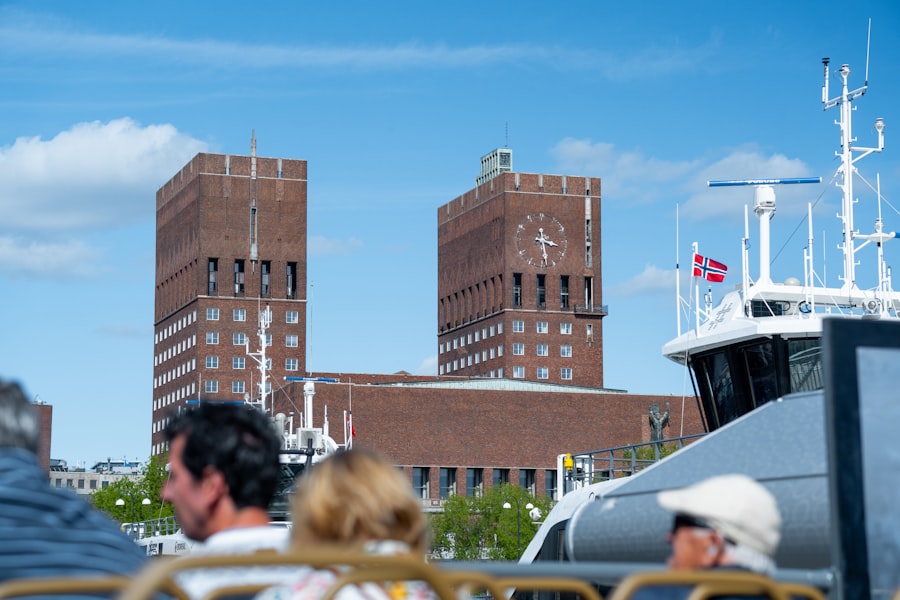
While the formal structure of a resignation letter is universal to some degree, Norwegian professional culture has its own particularities that can influence the tone and content of your “oppsigelsesbrev.”
The Emphasis on Directness and Honesty
Norwegian culture generally values directness and honesty. While politeness is always appreciated, overly flowery or indirect language can sometimes be perceived as less sincere.
- Be Concise: Get straight to the point. A lengthy, emotionally charged letter is generally not expected or appreciated in a professional context.
- Avoid Exaggeration: Be truthful and avoid hyperbole when describing your reasons for leaving or your experiences. Authenticity is key.
- The “Janteloven” Effect: While “Janteloven” (The Law of Jante) is a complex social construct and not directly applicable to formal business communication, it highlights a cultural tendency to downplay individual achievements and avoid overt self-promotion. In a resignation letter, this translates to a preference for a factual and understated approach rather than one that draws excessive attention to oneself.
Professionalism Over Personal Grievances
Your resignation letter is not the appropriate forum to air grievances or lodge complaints. If you have unresolved issues with your employer, these should be addressed through separate formal channels or discussions, not within your resignation document.
- Focus on the Future: Frame your departure around your future aspirations or new opportunities, rather than dwelling on past dissatisfactions.
- Maintain a Positive Outlook: Even if your departure is due to negative circumstances, it is generally advisable to maintain a professional and positive tone. Burning bridges is rarely beneficial in the long run.
- Constructive Departure: The primary goal of the resignation letter is to formally end your employment. Anything beyond that risks undermining its purpose and professionalism.
The Role of a Handwritten Element
While much business correspondence is now digital, in Norway, there can still be an appreciation for a handwritten element in formal documents, especially when it signifies a personal touch.
- Handwritten Signature: As mentioned earlier, a handwritten signature on a printed letter is standard practice and adds a personal touch, reinforcing the authenticity of your intent.
- Optional Handwritten Note: In some situations, particularly if you have a strong relationship with your manager, a brief handwritten note on top of or attached to the typed letter, expressing personal gratitude, can be a thoughtful addition. However, this is entirely optional and should only be considered if it feels natural and appropriate for your specific workplace dynamic. The core information must still be formally presented in the typed letter.
What to Include (and What to Avoid) in Your Letter

Crafting the content of your resignation letter requires a careful balance of necessary information and an understanding of professional etiquette.
What to Include
- Your Name and Contact Information: Essential for identification.
- Employer’s Name and Address: Ensures the letter is addressed correctly.
- Date: Crucial for establishing the start of your notice period.
- Clear Statement of Resignation: Unambiguous declaration of your intent to leave.
- Your Job Title: Clarifies which position you are resigning from.
- Effective Date of Resignation: The last day of your employment, calculated based on your notice period.
- Acknowledgement of Notice Period: Demonstrates your commitment to fulfilling your obligations.
- Offer of Assistance for Transition: Shows professionalism and consideration.
- Polite Closing and Signature: Standard formal closing.
What to Avoid
- Excessive Detail About Your Reasons for Leaving: Unless specifically asked in a follow-up conversation, the letter itself does not need a lengthy explanation. Keep it brief and professional.
- Complaints or Criticisms: As previously mentioned, this is not the place for grievances.
- Negative Comments About Colleagues or the Company: This can damage your reputation and create an unpleasant atmosphere.
- Demands or Ultimatums: Your resignation is a statement of intent, not a negotiation.
- Emotional Language: Maintain a calm and professional tone.
- Vague or Ambiguous Statements: Be precise and clear in your intentions.
- Failure to Check Your Contract: This is a factual error that can have significant consequences.
Submitting Your Resignation Letter
| Aspect | Description | Example Phrase (Norwegian) | English Translation |
|---|---|---|---|
| Salutation | Formal greeting to the employer or manager | Kjære [Navn] | Dear [Name] |
| Opening Statement | Clearly state the intention to resign | Jeg skriver for å informere om min oppsigelse | I am writing to inform you of my resignation |
| Notice Period | Specify the last working day according to contract | Min siste arbeidsdag vil være [dato] | My last working day will be [date] |
| Reason (Optional) | Briefly mention reason for leaving, if desired | Jeg har fått en ny mulighet som jeg ønsker å forfølge | I have received a new opportunity that I wish to pursue |
| Gratitude | Express thanks for the opportunity and experience | Takk for muligheten og samarbeidet | Thank you for the opportunity and cooperation |
| Offer to Assist | Offer help during the transition period | Jeg vil gjerne bidra til en smidig overgang | I would like to assist with a smooth transition |
| Closing | Formal closing phrase | Med vennlig hilsen | Yours sincerely |
| Signature | Full name of the resigning employee | [Ditt navn] | [Your name] |
The method of submitting your resignation letter can sometimes be as important as its content. Ensuring it is delivered correctly is vital for your departure to be officially recognised.
The Formal Delivery Process
In Norway, as in many countries, there is an expectation of formal delivery for official documents like a resignation letter.
- Personal Delivery: The most direct and often preferred method is to hand the letter personally to your direct manager. This allows for a brief, professional conversation about your departure.
- Email as a Supplement: While a physical letter is often ideal, in modern workplaces, sending a digital copy via email to your manager and potentially to HR is common. It is crucial to ensure that the email conveys the same formal tone and essential information as a physical letter. If you send an email, it’s good practice to follow up with a printed and signed copy.
- Registered Mail (“Rekommandert brev”): If personal delivery is not feasible or you wish to have absolute proof of delivery, sending the letter via registered mail is an option. This provides a receipt confirming that the letter has been received by the company. This is the legally safest route if you anticipate any difficulties or wish to be absolutely certain of the record.
The Importance of a Managerial Conversation
While the letter is the official record, a face-to-face or video call conversation with your manager is an important part of the resignation process.
- Professional Dialogue: This conversation is an opportunity to reiterate your decision, thank your manager for their support (if applicable), and briefly discuss the transition.
- Answering Questions: Your manager may have questions regarding your departure, and you can answer them directly and professionally.
- Maintaining Relationships: A positive conversation can help maintain a good relationship with your former employer and colleagues, which can be beneficial for future references or networking.
- Timing is Key: Ideally, the conversation should occur shortly after you have submitted the formal letter.
After Submitting Your Resignation
The process does not end with the submission of your letter. There are further steps and considerations to manage as you approach your final day.
Preparing for Your Handover
A smooth handover is crucial for maintaining your professional reputation and ensuring the company functions efficiently.
- Document Your Work: Create clear documentation of your ongoing projects, tasks, and any critical information your successor will need. This is like leaving a well-marked map for the next explorer.
- Train Your Replacement (if applicable): If a replacement has been hired, dedicate time during your notice period to train them thoroughly.
- Organise Your Files: Ensure your digital and physical files are organised and accessible.
- Communicate with Colleagues: Inform your immediate colleagues and relevant stakeholders of your departure and the transition plan.
Exit Interview
Many Norwegian companies conduct exit interviews (“sluttintervju”) to gather feedback from departing employees.
- Provide Constructive Feedback: This is an opportunity to offer honest yet constructive feedback about your experience at the company. Focus on actionable insights rather than personal complaints.
- Professionalism: Maintain a professional and respectful demeanour throughout the interview.
- Purpose of the Interview: Remember that the primary purpose is for the company to improve its practices, not necessarily to change your decision.
Final Checks and Farewell
In your final days, ensure all administrative tasks are completed and bid farewell to your colleagues.
- Return Company Property: Ensure all company property, such as laptops, mobile phones, keys, and access cards, is returned.
- Final Pay and Holiday Pay: Confirm the details of your final salary payment and any accrued holiday pay.
- Professional Farewell: A polite farewell to your colleagues is a good way to end your tenure on a positive note.
Seeking Professional Norwegian Language Support
Navigating the formal requirements of a resignation letter in a foreign language can be a daunting task. While this guide provides comprehensive information, understanding the nuances of Norwegian professional communication and ensuring your letter is perfectly drafted can be significantly enhanced with expert assistance.
The Benefits of Expert Guidance
When writing any formal document, especially one with legal and professional implications, precision and cultural appropriateness are paramount. A poorly worded or culturally insensitive resignation letter can, at best, create an awkward departure and, at worst, lead to misunderstandings or disputes.
NLS Norwegian Language School in Oslo
For those seeking to ensure their “oppsigelsesbrev” is not only grammatically perfect but also culturally aligned with Norwegian professional standards, the NLS Norwegian Language School in Oslo offers invaluable support. They specialise in providing 1 to 1 private Norwegian language courses that are tailored to the specific needs and goals of each individual learner.
The NLS Advantage: Personalised Instruction
The 1 to 1 private courses at NLS are a powerful tool for mastering the intricacies of Norwegian professional communication. Unlike larger group settings, these private sessions allow for a deep dive into your specific requirements.
- Individualised Curriculum: Your instructor will work with you to develop a learning plan that focuses on the vocabulary, grammar, and idiomatic expressions crucial for writing a professional resignation letter. This means you won’t waste time on topics irrelevant to your immediate needs.
- Targeted Practice: You will have ample opportunity to practice writing and discussing your resignation letter with a native-speaking expert who can provide immediate feedback and corrections. This iterative process is key to building confidence and accuracy.
- Cultural Coaching: Beyond just language, an NLS instructor can offer insights into Norwegian business etiquette and communication styles. This goes beyond rote learning and equips you with the cultural intelligence to navigate your professional interactions with confidence. For example, understanding the subtle difference between directness and abruptness, or how to phrase a request for assistance during handover in a manner that resonates well in a Norwegian context.
- Flexibility and Pace: The private courses at NLS allow you to set the pace of your learning. If you have a tight deadline, the course can be intensified. If you prefer a more relaxed approach, that is also accommodated. This flexibility is essential when dealing with the pressures of a job transition.
- Confidence Building: Preparing your resignation letter in a supportive, one-on-one environment can significantly boost your confidence. Knowing you have crafted a letter that is both accurate and appropriate in Norwegian will make your departure smoother and more professional.
By investing in 1 to 1 private Norwegian language courses at the NLS Norwegian Language School in Oslo, you are not just learning a language; you are acquiring the tools and confidence to manage a critical professional transition with the utmost professionalism and respect for Norwegian customs. This proactive approach will serve you well as you move forward in your career.
By adhering to the guidelines outlined in this article and considering the specialised support offered by institutions like the NLS Norwegian Language School in Oslo for their 1 to 1 private Norwegian language courses, you can navigate the process of writing a resignation letter in Norwegian with confidence and professionalism.