
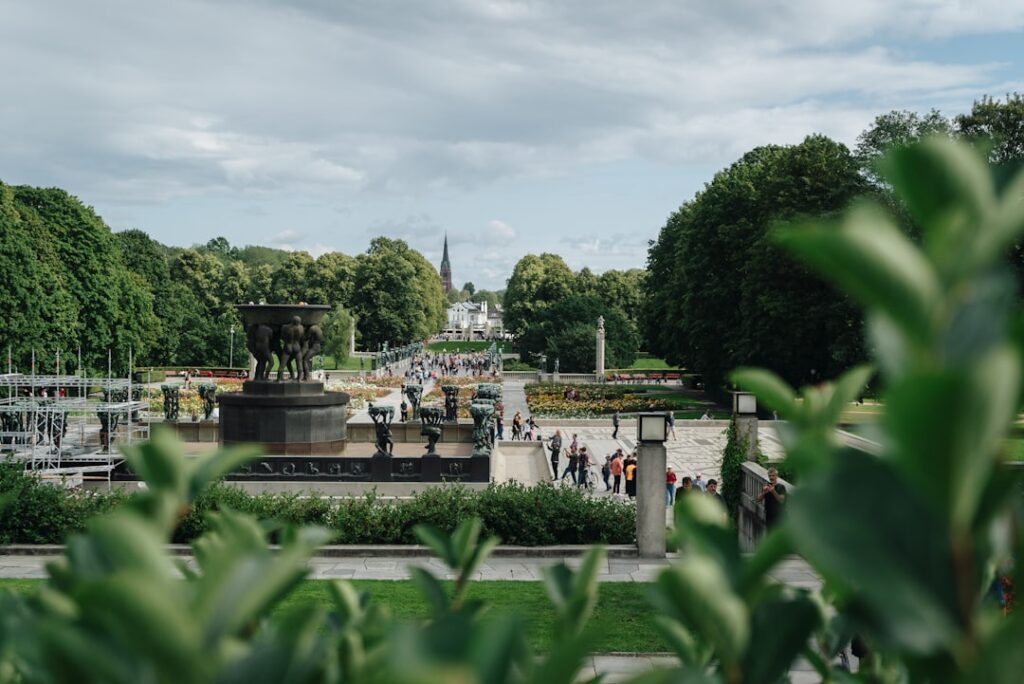
The Norskprøven assessment is a crucial hurdle for individuals seeking to demonstrate their Norwegian language proficiency, whether for immigration, employment, or academic pursuits. A significant component of this examination is the writing section, which often includes an exercise involving picture description. Mastering this skill is not merely about enumerating objects; it is about weaving a narrative, conveying context, and showcasing a nuanced understanding of the Norwegian language. This article will delve into effective strategies for excelling in the Norskprøven picture description task, equipping you with the tools to transform a visual stimulus into a compelling written response.
The picture description section of the Norskprøven is designed to assess your ability to observe, interpret, and articulate your thoughts in Norwegian. You will be presented with a visual, which could be anything from a single, static image to a series of sequential photographs depicting an event or a scenario. Your task is to produce a written text that comprehensively describes what you see, providing details, inferring relationships between elements, and potentially speculating about the context or actions taking place. Pass the Norskprøven with confidence—register at NLS Norwegian Language School now.
The Purpose of the Picture Description
The examiners are not solely looking for a literal transcription of every item in the image. They are evaluating several key linguistic competencies:
- Vocabulary: Your range and accuracy in using Norwegian words to describe objects, actions, emotions, and environments.
- Grammar and Syntax: Your ability to construct grammatically correct sentences and employ a variety of sentence structures.
- Cohesion and Coherence: Your skill in linking your descriptions logically, creating a flowing and understandable narrative.
- Interpretation and Inference: Your capacity to move beyond the superficial and infer meanings, relationships, and potential stories from the visual cues.
- Register and Tone: Your ability to adopt an appropriate tone for a formal assessment.
Common Pitfalls to Avoid
Many candidates stumble in this section due to a lack of preparation or a misunderstanding of what is expected. Common mistakes include:
- Literal Translation: Simply listing objects without any connective language or attempt at narrative.
- Repetitive Vocabulary: Overreliance on a small set of descriptive words.
- Grammatical Errors: Frequent mistakes in verb conjugations, noun declensions, or sentence construction.
- Lack of Detail: Providing only a superficial overview of the image.
- Over-Speculation: Making wild assumptions not supported by the visual evidence.
Deconstructing the Image: A Systematic Approach
Before you even begin to write, it is essential to adopt a structured method for analysing the picture. Think of yourself as a detective meticulously examining a crime scene; every detail, no matter how small, could be significant.
Initial Overview and Dominant Features
Begin by taking a general look at the entire image. What is the immediate impression it gives? What are the most striking elements?
- Overall Setting: Is it indoors or outdoors? What time of day does it appear to be? What is the general atmosphere (e.g., busy, peaceful, chaotic)?
- Main Subjects: Who or what are the primary focal points of the image? Are there people, animals, or significant objects?
- Dominant Colours and Lighting: How do these elements contribute to the mood or context of the picture?
Detailed Observation: Zooming In
Once you have a grasp of the overall picture, you need to delve into the finer details. This is where your observational skills and vocabulary will be put to the test.
People and Their Actions
If people are present, describe their appearance, their clothing, and, most importantly, what they are doing.
Physical Characteristics
- Age: Is it a child, a young adult, middle-aged, or elderly?
- Gender: Male, female, or ambiguous.
- Clothing: Describe their attire. Use specific terms for garments, colours, and styles. For instance, instead of “a shirt,” consider “a blue T-shirt,” “a striped blouse,” or “a formal suit.”
- Facial Expressions and Body Language: What emotions are they conveying? Are they smiling, frowning, looking surprised, or concentrating? Are they gesturing, sitting, standing, or running?
Interactions and Activities
- What are they doing? Are they talking, working, playing, eating, or travelling?
- Are they interacting with each other? If so, how? Are they collaborating, arguing, or simply coexisting?
- What is the purpose of their activity? Try to infer the context.
Objects and Their Significance
Every object in the image can contribute to the story. Consider their placement, their condition, and their potential function.
Identifying and Describing Objects
- Type of Object: Furniture, tools, vehicles, food items, electronic devices, etc.
- Material and Colour: Is it wooden, metallic, plastic, red, green, brown?
- Condition: Is it new, old, broken, clean, dirty?
- Location: Where is it placed within the scene? Is it on a table, on the floor, hanging on a wall?
Inferring Object Function and Context
- Purpose: What is this object used for?
- Relationship to Other Objects: Does it complement or contrast with other items in the scene? For example, a blackboard might suggest a school or classroom setting.
Environment and Atmosphere
The background and overall setting of the picture are crucial for establishing context.
Landscape and Urban Features
- Natural Elements: Trees, mountains, rivers, sky, weather conditions (sunny, rainy, snowy).
- Man-made Structures: Buildings, roads, bridges, signs, vehicles.
- Indoor Environments: Rooms, furniture, decorations, lighting.
Mood and Atmosphere
- Sensory Details (Implied): While you can’t directly sense smell or sound from an image, you can infer them. Does the scene suggest warmth from a fireplace, the hustle and bustle of a city, or the quiet serenity of a forest?
- Colours and Light: How do these contribute to the overall feeling? Bright colours might suggest happiness, while muted tones could imply melancholy or seriousness.
Structuring Your Picture Description
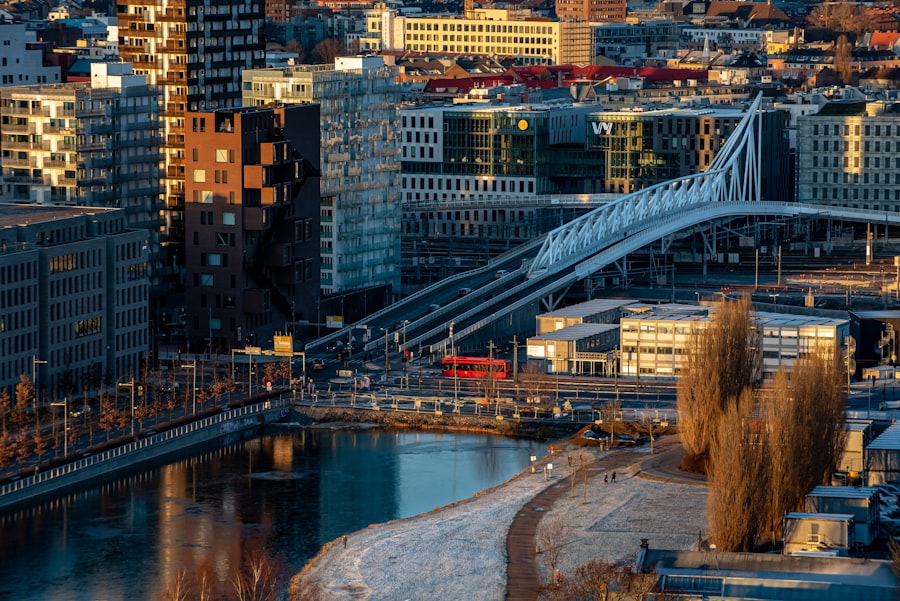
A well-structured description is like a well-built house: it has a strong foundation, sturdy walls, and a logical flow. Simply listing observations will not impress the examiner; you need to create a coherent and engaging piece of writing.
The Introduction: Setting the Scene
Your introduction should immediately inform the reader about the general nature of the picture. It’s your first impression, your initial statement to the world of the image.
- General Overview: Begin with a sentence or two that broadly describes the image. For example, “Bildet viser en travel gate i en by om dagen” (The picture shows a busy street in a city during the day).
- Main Subject/Theme: Briefly introduce the central focus or theme of the image. This could be people engaged in an activity, a particular landscape, or an event.
The Body Paragraphs: Developing the Narrative
The body of your description is where you expand on your observations, presenting them in a logical and organised manner. Each paragraph should focus on a specific aspect of the image or a group of related details.
Spatial Organisation
One effective method is to describe the image spatially, moving from foreground to background, left to right, or by focusing on specific zones.
- Foreground: What is closest to the viewer?
- Midground: What is situated between the foreground and the background?
- Background: What appears furthest away?
Thematic Organisation
Alternatively, you can organise your description thematically, dedicating paragraphs to people, objects, the environment, or specific actions.
- Paragraph 1: People and their actions.
- Paragraph 2: Key objects and their significance.
- Paragraph 3: The surrounding environment and atmosphere.
- Paragraph 4: Inferred relationships or ongoing events.
Linguistic Tools for Cohesion
To ensure your description flows smoothly, employ a range of cohesive devices. These are the threads that tie your sentences and paragraphs together, preventing your writing from becoming a jumble of disconnected observations.
Prepositions of Place
Crucial for conveying spatial relationships.
- Absolute positions: på bordet (on the table), under stolen (under the chair), ved siden av vinduet (next to the window).
- Relative positions: foran (in front of), bak (behind), mellom (between), rundt (around).
Connectors and Conjunctions
These link clauses and sentences, showing the relationship between ideas.
- Addition: og (and), dessuten (furthermore), i tillegg (in addition).
- Contrast: men (but), imidlertid (however), på den annen side (on the other hand).
- Cause and Effect: fordi (because), derfor (therefore), så (so).
- Sequence: først (first), deretter (then), til slutt (finally).
Pronouns and Demonstratives
Help to avoid repetition and maintain clarity.
- Pronouns: den (it/that, common gender), det (it/that, neuter gender), de (they/them).
- Demonstrative adjectives and pronouns: denne (this, common gender), dette (this, neuter gender), disse (these).
The Conclusion: Summarising and Inferring
Your conclusion should provide a sense of closure. It’s an opportunity to offer a final thought or a summary of your interpretation.
- Overall Impression: Briefly reiterate the main impression or atmosphere of the picture.
- Potential Narrative or Theme: Offer a concluding thought about the story the picture tells or the overall message it conveys. This is where you can demonstrate deeper interpretation, but ensure it’s grounded in the visual evidence.
Enhancing Your Description: Vocabulary and Grammar
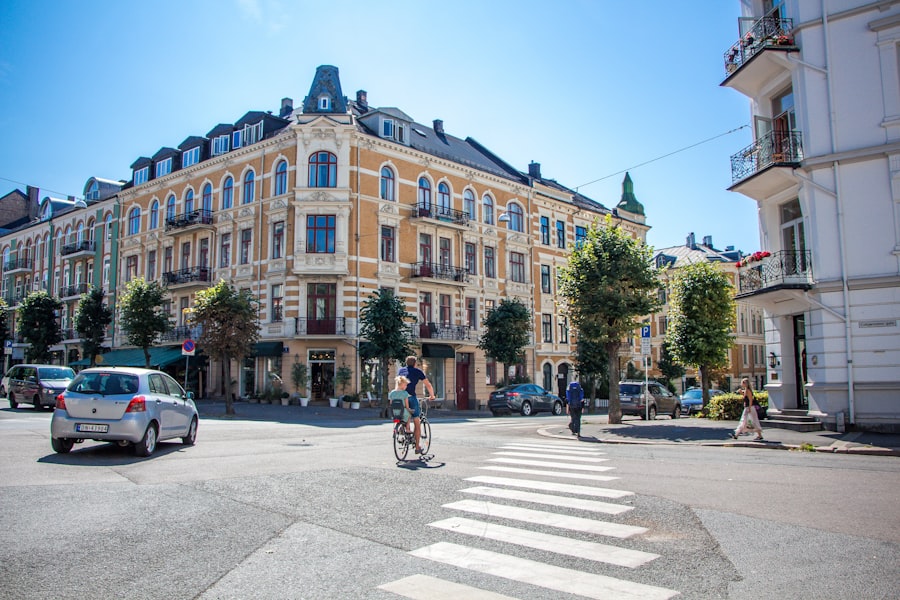
The quality of your language is paramount. Using precise vocabulary and varied grammatical structures will elevate your description from adequate to accomplished.
Expanding Your Descriptive Vocabulary
Move beyond basic adjectives and adverbs. Think about the nuances of colours, textures, emotions, and actions.
Adjectives for People and Emotions
- Appearance: langhåret (long-haired), skjeggete (bearded), smidig (agile), kraftig (sturdy).
- Emotions: glad (happy), trist (sad), sint (angry), urokkelig (calm), bekymret (worried), spent (excited).
Adjectives for Objects and Environment
- Colours: lysblå (light blue), mørkegrå (dark grey), knallrød (bright red), pastellfarget (pastel-coloured).
- Textures: glatt (smooth), ru (rough), myk (soft), hard (hard).
- Conditions: nytt (new), gammelt (old), skittent (dirty), rent (clean), ødelagt (broken), fungerende (working).
Verbs for Actions and Interactions
- Common actions: går (walks), løper (runs), spiser (eats), drikker (drinks), snakker (talks), leser (reads).
- More specific actions: plukker opp (picks up), legger ned (puts down), peker på (points at), ser på (looks at), holder i (holds).
- Interactions: diskuterer (discusses), samarbeider om (collaborates on), hjelper hverandre (helps each other), krangler om (argues about).
Mastering Grammatical Structures
Varying your sentence structure demonstrates a higher level of linguistic competence.
Using Different Sentence Types
- Simple sentences: Solen skinner. (The sun is shining.)
- Compound sentences: Solen skinner, og fuglene synger. (The sun is shining, and the birds are singing.)
- Complex sentences: Personen som sitter ved vinduet, ser ut på regnet. (The person sitting by the window is looking out at the rain.)
Employing Passive Voice Appropriately
The passive voice can be useful for shifting focus away from the actor and onto the action or the object.
- Active: Mannen maler veggen. (The man is painting the wall.)
- Passive: Veggen blir malt. (The wall is being painted.)
Using Relative Clauses
These clauses provide additional information about a noun and are essential for creating more sophisticated sentences.
- Mannen, som har på seg en rød hatt, står ved siden av bussen. (The man, who is wearing a red hat, is standing next to the bus.)
Practicing for Success: The Path to Proficiency
| Tip | Description | Example | Benefit |
|---|---|---|---|
| Observe Carefully | Look closely at all elements in the picture before starting to write. | Noticing the weather, people’s expressions, and objects. | Helps create a detailed and accurate description. |
| Use Simple Sentences | Write clear and straightforward sentences to convey your message. | “The man is sitting on a bench.” | Improves clarity and reduces grammatical errors. |
| Include Time and Place | Mention when and where the scene is taking place. | “It is a sunny afternoon in a park.” | Provides context and makes the description more vivid. |
| Describe Actions | Explain what the people or objects in the picture are doing. | “The children are playing with a ball.” | Shows understanding of the scene and adds depth. |
| Use Appropriate Vocabulary | Choose words that fit the scene and level of the test. | Using words like “smiling,” “walking,” “cloudy.” | Demonstrates language proficiency and accuracy. |
| Organise Your Text | Structure your description logically with an introduction, body, and conclusion. | Start with the setting, then describe people and actions, end with a summary. | Makes the text easier to read and understand. |
| Check Grammar and Spelling | Review your writing for mistakes before submitting. | Correct verb tenses and spelling errors. | Improves overall quality and test score. |
Consistent practice is the cornerstone of success in any language assessment. Just as an athlete trains repetitively to perfect their form, you must engage in regular practice to hone your picture description skills.
Regular Image Analysis
Make it a habit to analyse images regularly, even if they are not specifically provided for Norskprøven preparation.
- Newspapers and Magazines: These are excellent sources of diverse photographs.
- Online Resources: Many websites offer image galleries.
- Everyday Scenes: Even observing your surroundings can be practice.
Timed Writing Exercises
The Norskprøven has time constraints. Practise writing descriptions under timed conditions to build speed and efficiency.
- Set a Timer: Allocate a specific amount of time for each description.
- Focus on Content First: In initial practice sessions, focus on conveying all your observations accurately.
- Refine and Edit: In later stages, work on improving your vocabulary, grammar, and sentence structure within the allocated time.
Seeking Feedback and Review
Self-assessment is valuable, but external feedback can highlight areas you might overlook.
- Language Partners: Exchange descriptions with fellow learners and provide constructive criticism.
- Tutors and Teachers: If possible, seek guidance from a qualified Norwegian language instructor.
The NLS Norwegian Language School: Your Gateway to Norskprøven Success
Navigating the intricacies of the Norskprøven writing section, particularly the picture description, can feel like traversing an unfamiliar landscape. This is where focused, expert guidance becomes invaluable. The NLS Norwegian Language School in Oslo offers a specialised solution for aspiring test-takers: the Norskprøven Norwegian Test Preparation course. This comprehensive programme is meticulously designed to equip you with the specific skills and strategies required to excel in all facets of the Norskprøven, with a particular emphasis on developing your writing prowess.
At NLS, the Norwegian Test Preparation course is not a generic language class; it is a targeted intervention, a carefully crafted roadmap to help you conquer the Norskprøven. The curriculum is structured to align with the Common European Framework of Reference for Languages (CEFR) standards, ensuring that your learning is both globally recognised and directly relevant to your test objectives. Whether you are at an intermediate or advanced stage of your Norwegian language journey, there is a place for you in this programme.
Crucially, the Norskprøven Norwegian Test Preparation course at NLS Norwegian Language School in Oslo incorporates mock tests. These are not mere practice exercises; they are designed to simulate the actual examination environment, allowing you to gauge your preparedness, identify your strengths and weaknesses, and build confidence. By regularly engaging in these mock tests, you will become intimately familiar with the demands of the Norskprøven, including the pressure of time and the specific requirements of each section. This experiential learning is a powerful tool for solidifying your knowledge and refining your test-taking strategies. The instructors at NLS understand the nuances of the Norskprøven, and their guidance during these mock tests will be instrumental in helping you refine your approach to picture description and other writing tasks, turning potential anxieties into demonstrable competencies.
Sign up now for Norskprøven prep courses at NLS Norwegian Language School